
Last updated August 25, 2026
Free on-site gate assessment - hinges, posts, and your LiftMaster or Nice gate operator checked before anything is quoted
The assessment is free and the quote is the invoice.

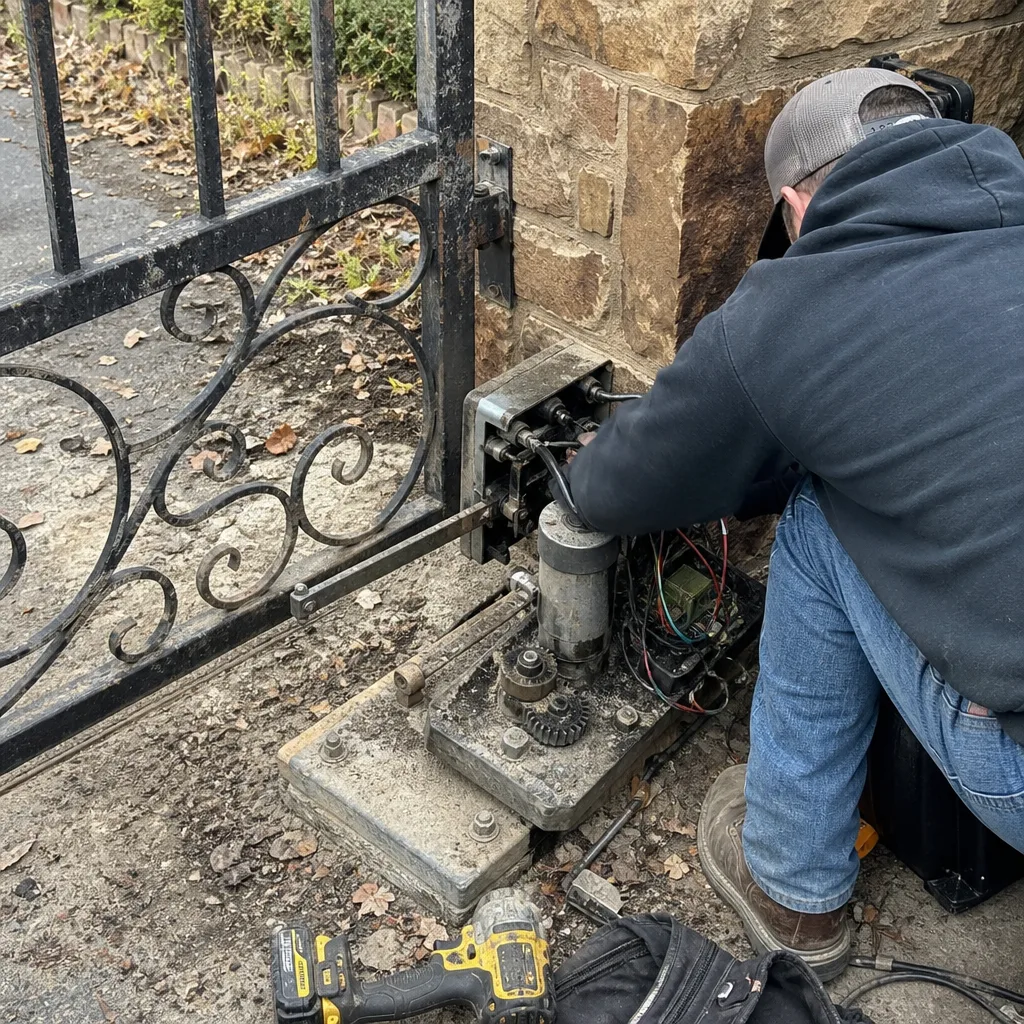 Before
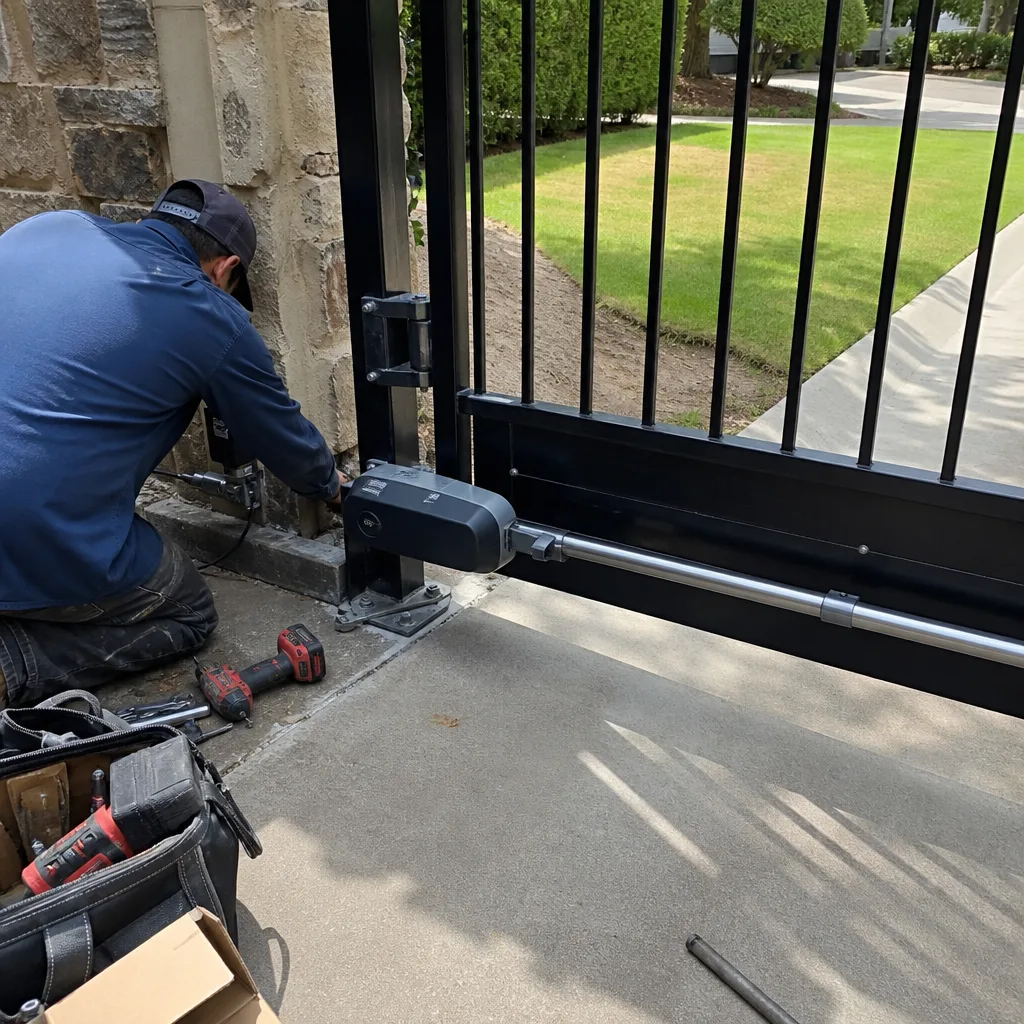 After
After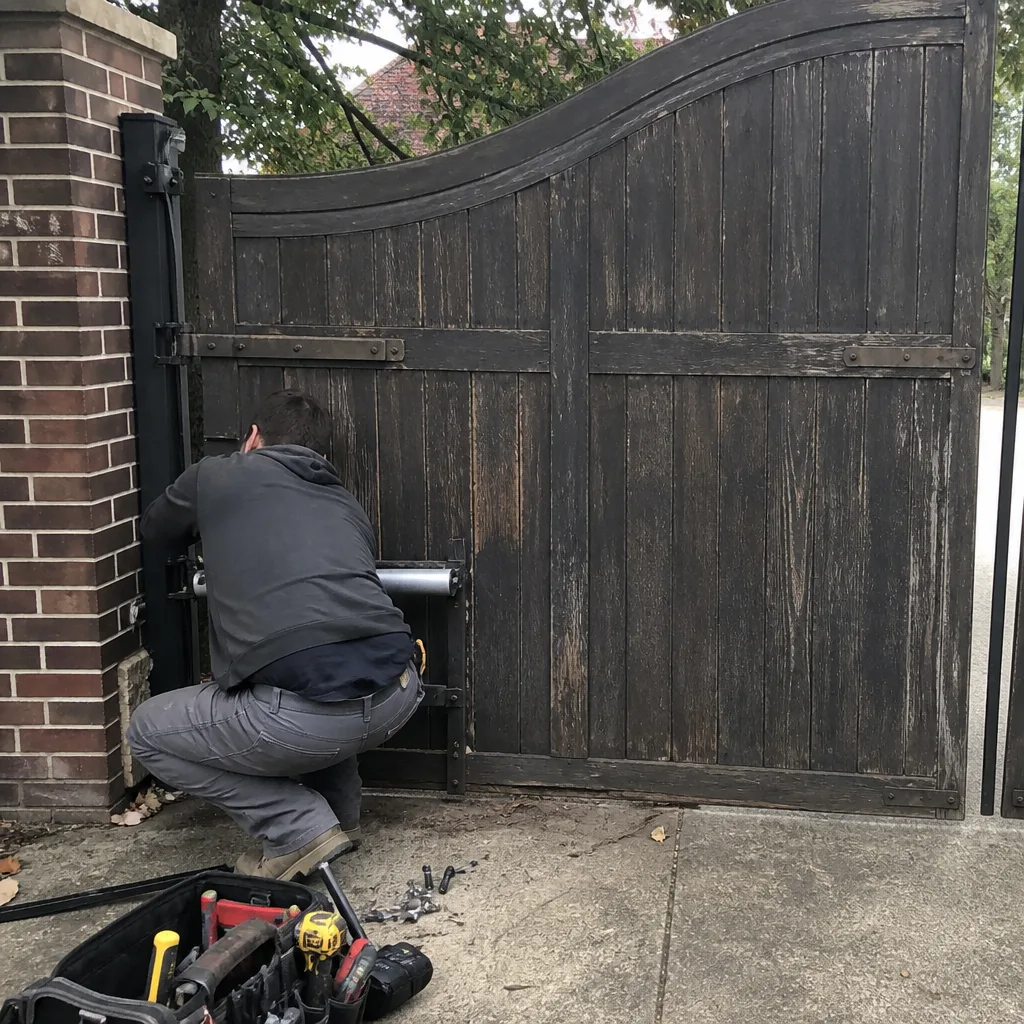 Before
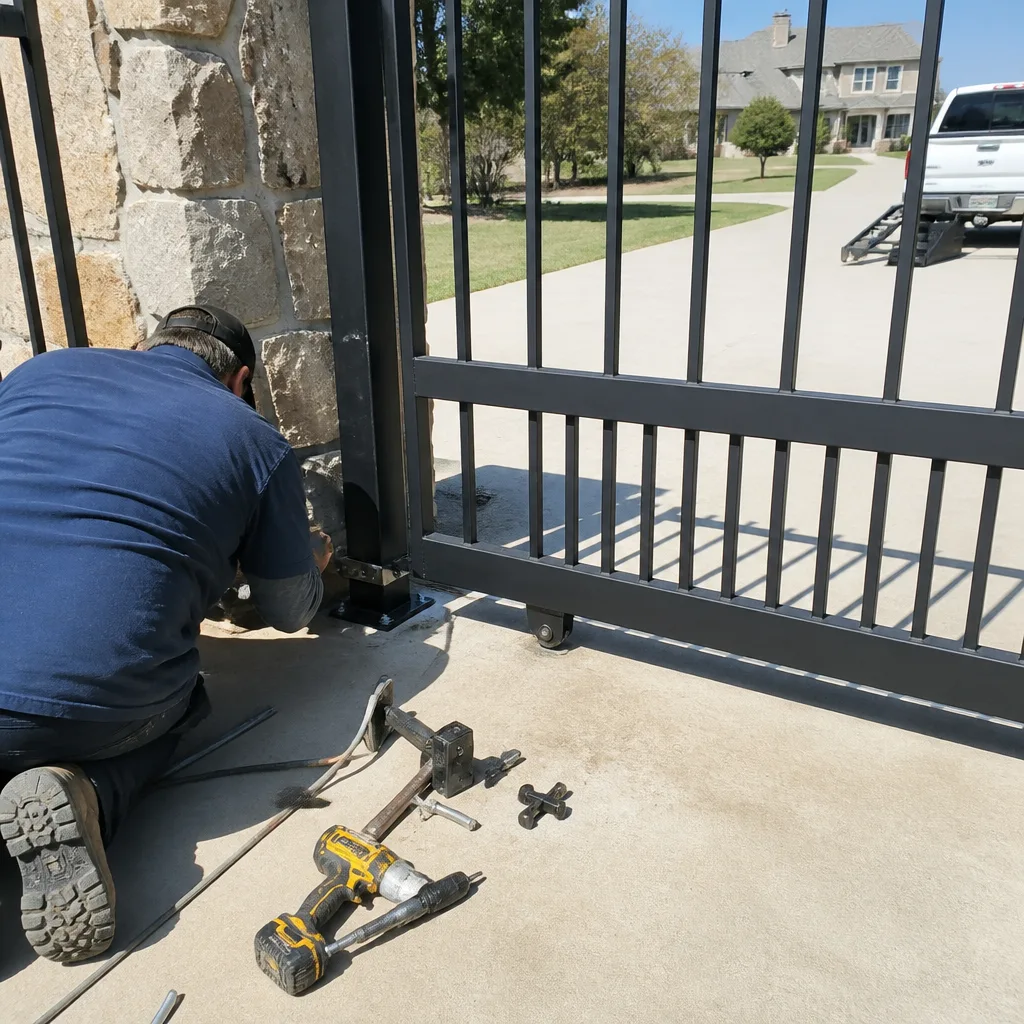 After
After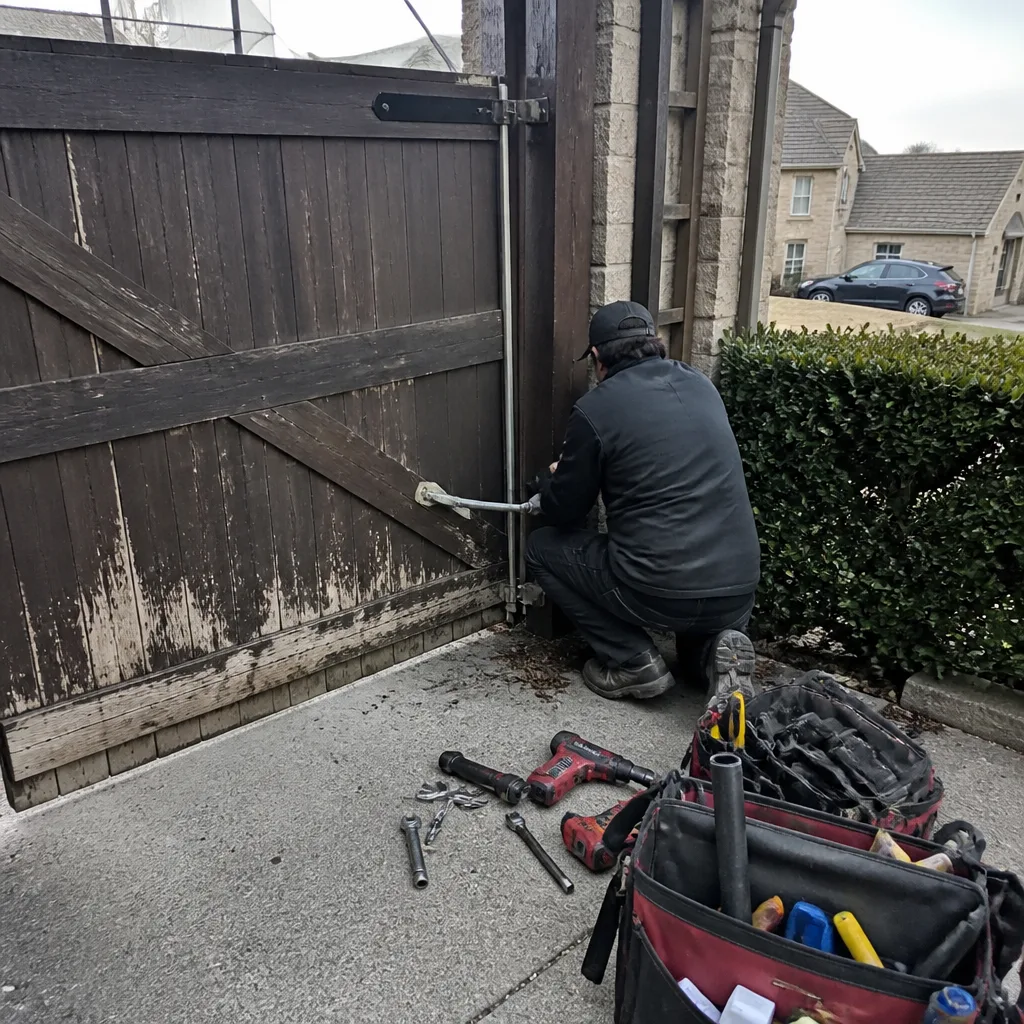 Before
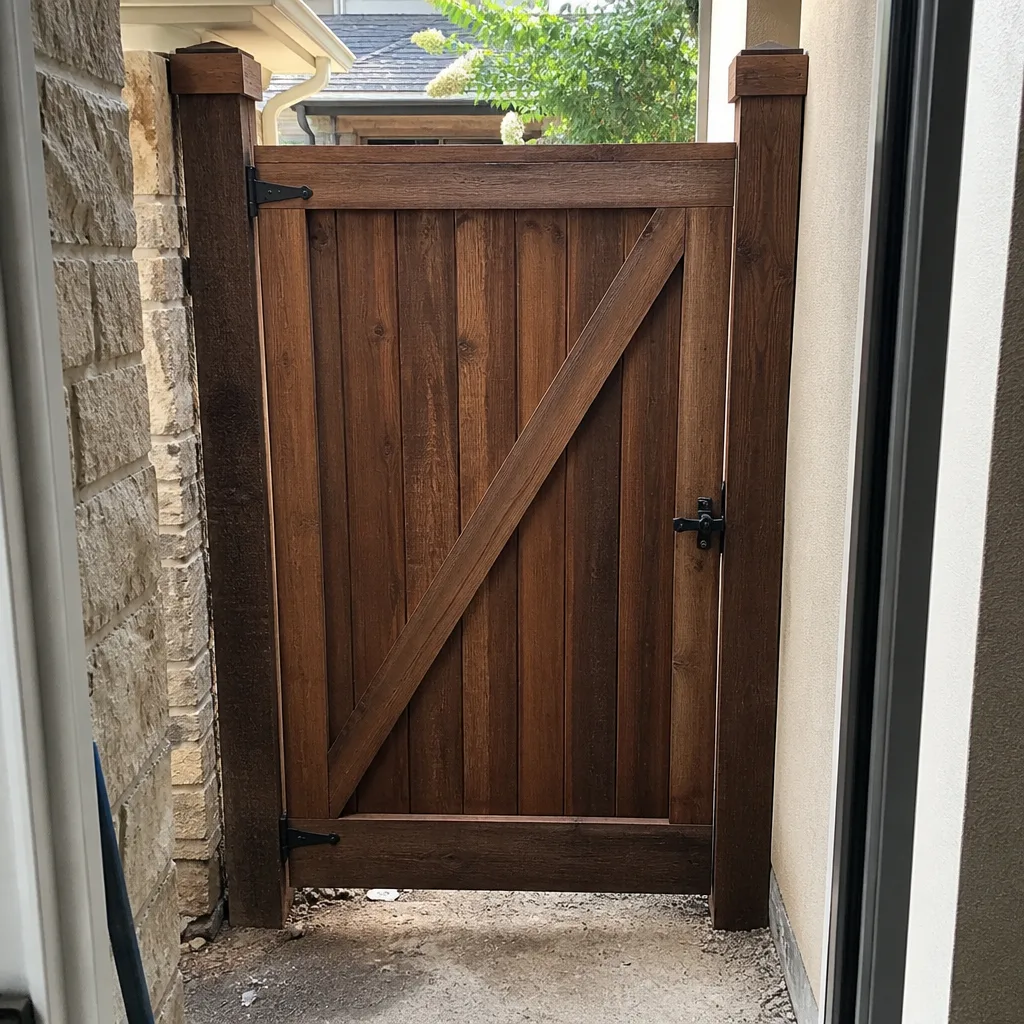 After
AfterSeasonal Gate Repair Care for Southlake: Year-Round Homeowner’s Guide
Here is something most Southlake homeowners do not realize until a gate fails: the average automatic driveway gate cycles open and closed roughly 3,000 times a year, and in North Texas that gate is working against heat, clay soil movement, and wind that never quite lets up. A gate that gets two hours of maintenance a year will typically outlast a neglected gate by a decade or more. This guide walks through what Southlake weather actually does to gate hardware month by month, what a homeowner can safely handle, and what should be left to a technician with the right training and equipment.
Quick Answer
Seasonal gate care in Southlake means doing a visual hardware check every spring and fall, keeping the track and hinges clear of debris year-round, and scheduling a professional tune-up once a year to catch motor strain, sagging welds, and sensor drift before they turn into a full gate failure. A simple seasonal routine costs very little and prevents most of the expensive repairs we see in this area. The details below explain exactly what to check, when to check it, and why Southlake’s specific climate makes this schedule matter more than in most of the country.
Table of Contents
- Spring Gate Care in Southlake: Recovering from Winter and Preparing for Heat
- Summer Gate Care: Heat, Clay Soil, and Sensor Strain
- Fall Gate Care: The Most Important Season for Southlake Gates
- Winter Gate Care: Freeze Cycles and Battery Health
- The Monthly 10-Minute Gate Check Every Homeowner Should Do
- What a Professional Seasonal Tune-Up Actually Includes
- Seasonal Damage: When Repair Makes Sense and When Replacement Does
- Common Mistakes to Avoid
- When to Call a Professional
- Frequently Asked Questions
Spring Gate Care in Southlake: Recovering from Winter and Preparing for Heat
Spring is the season when a Southlake gate that made it through February starts to show its age. The freeze-thaw cycles of a typical Texas winter are hard on welds and fasteners, but the real damage often stays hidden until the first sustained warm stretch. In our experience working on driveway gates across Southlake, spring failures tend to cluster around three things: loosened hinge bolts, cracked weld joints, and opener motors that have been running against increased resistance without anyone noticing.
Here is the counterintuitive part: most of what fails in spring did not break in spring. It broke in January or February. The expansion that comes with March and April temperatures simply finishes what the cold started. A hairline crack in a weld widens as the metal warms. A bolt that was torqued in 80-degree weather works loose when the temperature drops forty degrees, then never re-seats. This is why the first thorough gate inspection of the year should happen in early spring, not late spring. By May, whatever was going to fail has usually already failed, often at the worst possible moment, like when the gate is mid-cycle with a car in the opening.
Here is a spring checklist for Southlake homeowners:
- Inspect every weld joint on the gate leaf and the hinge posts. Look for hairline cracks at the corners where horizontal rails meet vertical pickets. Run your hand along the bead if you can reach it: a crack will catch a fingertip even when the eye misses it.
- Check the hinge bolts with a wrench, not a glance. Hinges work loose slowly. A bolt that looks fine can have a quarter-inch of play. Tighten anything that turns easily.
- Clear the gate track and the full swing path. Spring in Southlake means oak pollen, live oak leaves, and new mulch spread in flower beds. A track gate cannot tolerate debris; a swing gate with a blocked path will strain the opener or damage a hinge.
- Test the auto-reverse on the opener. Place a 2×4 in the gate path and run the cycle. If the gate does not stop and reverse on contact, stop using the opener and call a technician. This is a safety issue, not a convenience issue.
- Lubricate the hinges and any chain drive with a dry silicone spray. Do not use grease. Grease attracts North Texas dust and turns into a grinding paste within weeks.
If the gate makes noise it did not make in November, or if the opener sounds like it is working harder, do not wait until summer. A motor straining in April will be a dead motor by August.
Summer Gate Care: Heat, Clay Soil, and Sensor Strain
Summer in Southlake is when gates move the most and get the least attention. The kids are home, the pool gate sees constant traffic, and the driveway gate cycles a dozen times a day during the week. Meanwhile, the temperature is doing two things to the hardware that no amount of shade can prevent.
First, heat expansion changes the geometry of the gate. A steel gate that fit perfectly in 70-degree weather will be slightly larger in 100-degree weather. The clearance at the latch side shrinks. A gate that had a half-inch gap in April can be rubbing the post by July. This is normal, and it usually corrects itself in the fall, but if the gate is dragging or if the opener is hitting its force limit to close, the fix in Southlake is to adjust the travel limits and check latch alignment, not to grind metal off.
Second, and this is the bigger issue for Southlake specifically, the clay soil under the gate posts is moving. North Texas clay shrinks dramatically in sustained heat. A post that was set in moist soil this spring can lose support as the ground dries out and cracks. We have seen gate posts in Southlake shift an inch or more between June and September, especially on driveway gates where the post footing was poured shallow or without enough concrete. When a post moves, the gate leaf moves with it, and the opener motor takes the strain. Even a small post shift of a quarter inch can change the closing geometry enough to trip the safety sensors or burn out a control board over time.
Summer gate care steps:
- Watch the gap at the latch side. If the gap is visibly smaller in late afternoon than in the morning, the metal is expanding normally. If the gate is binding, call before the opener fails.
- Water the ground around gate posts only if your foundation company recommends it. This is a common Southlake question. Adding water to clay soil around posts can help stabilize them in dry years, but overwatering softens the ground and makes the post lean. Do not soak the post area; consistent, light moisture is safer.
- Clean the photo-eye sensors every two weeks in summer. Dust, pollen, and spider webs accumulate faster in dry heat. A dirty sensor is the single most common cause of a gate that reverses for no reason, and it is also the easiest fix.
- Check the control board’s ventilation. Enclosures on the sunny side of a post can exceed 140 degrees inside. If the board has been overheating, the gate will run erratically or stop mid-cycle. A technician can verify whether the enclosure location is the problem.
Fall Gate Care: The Most Important Season for Southlake Gates
If a Southlake homeowner does one thing all year, it should be a fall gate inspection. The reasoning is straightforward: fall gives you about six weeks of mild weather before the freeze cycles begin, which is enough time to schedule and complete repairs that prevent winter breakdowns. Once the first hard freeze arrives, a gate that was already marginal will fail, and the repair call happens on a cold morning with a car trapped in the driveway.
Fall is also when the wind comes back to Southlake. A swing gate acts like a sail in 25-mile-per-hour north winds, and every gust that rocks the gate is testing the hinge welds, the opener arm, and the fasteners. Over a season of steady wind, small issues become big ones. We have repaired gates that were perfectly functional in September and cracked at a hinge weld by Thanksgiving, simply from wind load on a large, heavy leaf.
Here is the fall routine that catches most problems:
- Do a full-cycle test with the opener detached. Open the manual release and swing or slide the gate by hand. It should move smoothly with consistent effort. If it binds, catches, or feels heavier than last year, the opener is working against resistance that will shorten its life.
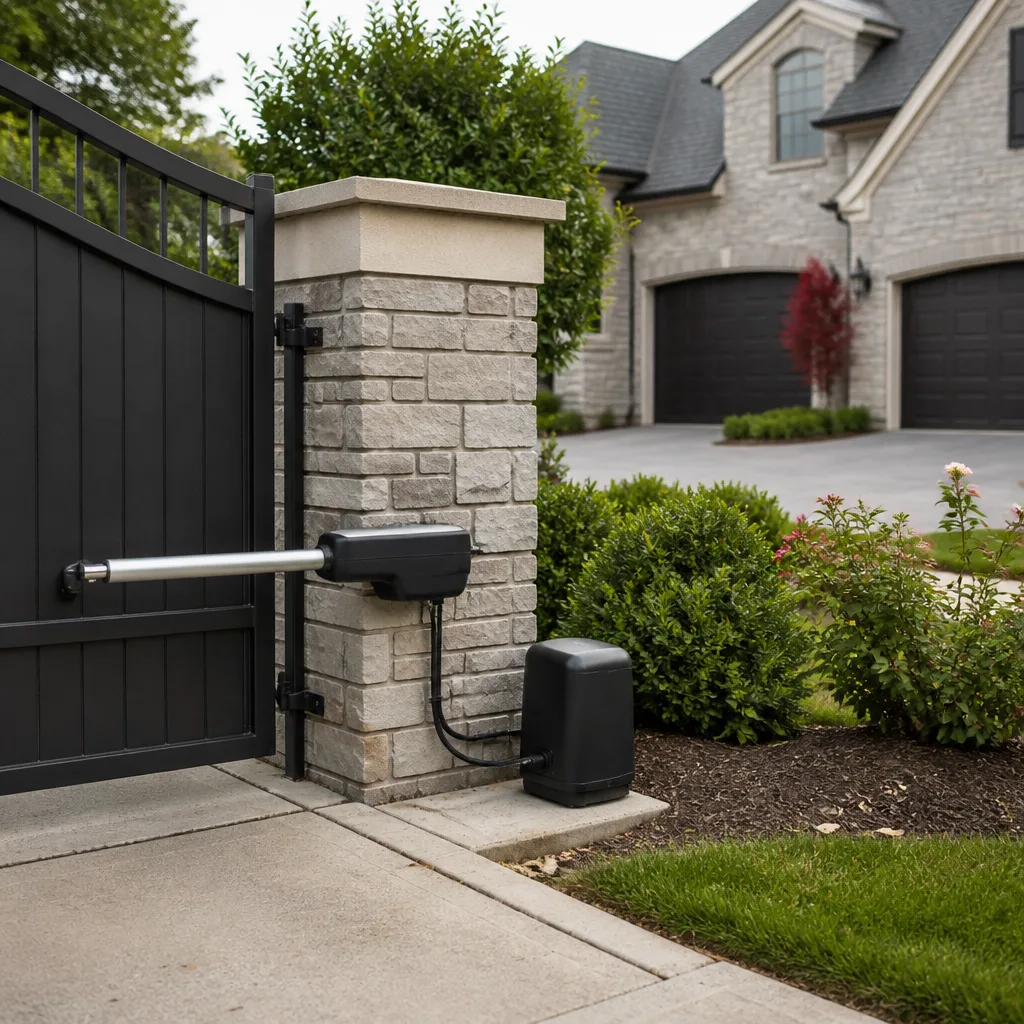
- Check the opener arm connection points. Look for worn bushings, ovaled-out holes, or a loose bolt at the connection between the arm and the gate leaf. These are high-wear points on every swing gate in Southlake.
- Test the safety sensors on both the close cycle and the open cycle. For gates that open into the street, an auto-reverse on opening is a code requirement. If the gate does not reverse on contact in both directions, it needs attention before winter.
- Inspect weather stripping and the bottom edge. If the gate is wood, check for rot at the bottom edge where rain collects. If the gate is steel, look for rust starting at the corners and around any welds. A little surface rust treated in October is cosmetic; the same rust by March can be structural.
- Run a battery load test on the opener’s backup battery. Batteries fail in cold weather, and a battery that tests fine at 70 degrees may be dead at 30. This is a simple check that prevents the most common winter emergency we see in Southlake.
One more fall note specific to Southlake: oak trees drop their leaves over several weeks, and those leaves end up in gate tracks and around the base of gate posts. A leaf clogged track is the most preventable gate failure in this area. Take five minutes every week in October and November to clear it.
Winter Gate Care: Freeze Cycles and Battery Health
Winter in Southlake is not a deep freeze, but it is not gentle either. The problem is not sustained cold; it is the cycling. A typical January day can go from 26 degrees at sunrise to 55 in the afternoon, which means the metal, the ground, and the electronics are all repeatedly contracting and expanding. Each cycle works hardware a little looser. A winter with twenty freeze-thaw days will do more damage than a winter with a single week-long freeze.
The most common winter gate issue we see across Southlake is a gate that moves slower in the cold. Hydraulic operators are more sensitive to cold than electromechanical ones, and any opener will draw more current as the cold thickens the internal grease. A gate that is slow in the morning but fine by noon is usually not broken, but it is worth monitoring. A gate that stays slow all day, or that will not open at all, usually means a battery that has given up in the cold or a control board that has already been stressed by other problems.
Winter care steps:
- Test the opener on the coldest morning of each month. If the gate hesitates, beeps, or fails to move, address it before the next freeze.
- Keep the track and the gate base clear of ice. Do not try to break ice off a metal gate with a hammer; the shock can crack a weld. Use de-icing salt or a plastic scraper, and clear the track so the gate is not trying to push through ice.
- Do not disable the auto-reverse to force the gate closed in cold weather. This is tempting when the gate is slow or stopping short, but bypassing a safety feature to overcome a mechanical problem is how injuries and property damage happen. If the gate will not close properly, call us; do not override the sensor.
- Check the gate leaf for new cracks after any extended freeze. Cold makes steel more brittle. A gate that sags or a weld that pops after a freeze is telling you something real about the state of the metal.
For Southlake homeowners, a working backup battery is not optional. The power grid in North Texas has proven it will go down in extreme cold, and when it does, the gate opener runs on its battery alone. If the battery is four years or older and has not been load tested, assume it needs replacement before the next winter storm.
The Monthly 10-Minute Gate Check Every Homeowner Should Do
Between the seasonal deep inspections, a monthly visual check catches most acute problems early. This is not a mechanical inspection. It is ten minutes of looking, listening, and paying attention. Most gate failures in Southlake give warning signs for weeks before the gate actually stops working. A homeowner who knows what to watch for becomes the first line of defense.
The monthly check, step by step:
- Stand at the end of the driveway and watch one full open-and-close cycle. The gate should move smoothly, with no jerking, no hesitation, and no grinding. Smooth operation is the baseline. Anything less smooth than last month is a change, and changes have causes.
- Listen to the opener. A healthy opener hums. A strained opener whines, buzzes, or clanks. If the sound has changed since last month, write down what you hear and when it happens. The description will save the technician time.
- Check the gap between the gate leaf and the latch post on both sides. An even gap is good. A gap that is wider at the top than the bottom, or wider on one side, signals a shifting post or a sagging leaf.
- Look at the ground under the gate’s travel path. New scrape marks on concrete or worn spots in the grass mean the gate is riding low or dragging.
- Glance at the hinges and the opener arm. Rust, black streaks, or missing bolts are all visible from six feet away. None of them get better on their own.
- Clear obvious debris. Leaves, mulch, kid’s toys, landscape rocks: anything in the gate path or the track is a repair bill waiting to happen.
This routine takes ten minutes. In our 42 years of gate work, a homeowner who does this monthly catches problems when they are $150 repairs instead of $1,500 replacements.
What a Professional Seasonal Tune-Up Actually Includes
There is a difference between a visual check and a tune-up, and the difference matters. A tune-up is a service, not an inspection. The technician is not just looking; they are adjusting, lubricating, testing, and correcting. When we perform a seasonal tune-up on a Southlake gate, the work follows a specific order and results in a gate that closes more smoothly and an opener that does not work as hard to do its job.
A professional tune-up should include, at minimum:
- Full mechanical inspection of hinges, welds, fasteners, and track wheels. Any loose fastener gets tightened to spec. Any weld showing fatigue gets flagged for repair before it fails.
- Opener diagnostics, including force and limit adjustments. The opener’s force settings should be checked against the current weight and resistance of the gate, not what they were set to on install day. Gates get heavier as they age; openers that are not re-adjusted wear out faster.
- Battery load test and replacement recommendation. This is the single most missed item on gates we see from other companies. A battery that passes a voltage check can still fail a load test, and load testing is the only test that predicts cold-weather performance.
- Photo-eye cleaning and alignment verification. Sensors drift. The receiver and transmitter must be aligned to within a narrow window, and a tune-up re-verifies that alignment.
- Belt or chain tension check on opener drives. A loose chain slaps and wears the sprocket. A tight belt strains the motor. Both are corrected during a tune-up.
- Lubrication of all moving contact points. Dry silicone or a lithium-based lubricant on hinges, wheels, and chain drive only. No grease, no WD-40 on electrical components.
Ironworks Gate Co. performs this work for $89 during our seasonal tune-up offer, which is available to every Southlake homeowner. We also offer a free second opinion on any written estimate from another gate company. If another company has quoted you a repair or replacement, bring us the estimate and we will tell you, honestly, what is needed and what is not.
Most tune-ups take less than an hour and most issues are corrected before the technician leaves. We prefer it that way. A gate that gets a tune-up in October rarely becomes an emergency call in January.
Seasonal Damage: When Repair Makes Sense and When Replacement Does
The most honest thing we can tell a Southlake homeowner is this: sometimes a repair is the right call, and sometimes a repair is just a way to spend money delaying a replacement. We have talked homeowners out of repairs they did not need, and we have talked homeowners out of throwing good money after a gate that was past saving. The decision comes down to condition, cost, and what the gate is worth.
Here is how we think about it:
- Repair makes sense when the damage is isolated. A cracked hinge weld, a failed opener board, a bent wheel on a track gate: these are repairable components on an otherwise sound gate. Fix the part, keep the gate.
- Repair makes sense when the gate is younger than 10 years. A well-installed steel or iron gate should last 20 to 30 years in Southlake, provided the seasonal care in this guide is followed. A younger gate with a repairable problem is almost always worth fixing.
- Replacement makes more sense when the frame is rusted through in multiple places. Surface rust is treatable. Rust that has eaten through the metal at the bottom rail or at picket connections means the gate’s structure is compromised, and no weld will hold it for long.
- Replacement makes more sense when the gate has already been repaired twice for the same failure. A recurring problem is not a repair issue; it is a design or install issue. The third repair will be followed by a fourth.
- Replacement is the answer when the gate no longer fits the property’s needs. A gate that is too narrow for the vehicles now using it, or a gate that was hung on posts that were undersized to begin with, will never be right no matter how much is spent on repairs.
Southlake has a wide range of gate styles, from simple estate gates on the residential streets near Dove Road to heavier automated systems on larger properties. What a gate cost to install is not the same as what it costs to replace today, so the decision is not always obvious. A good gate company will walk you through the math and the condition in plain language, without pressure. We believe the owner of the gate should understand the recommendation well enough to explain it to a neighbor.
Common Mistakes to Avoid
- Skipping the fall inspection because the gate “worked fine all summer.” Gates do not fail in good weather. They fail when the weather turns. The whole point of fall inspection is to catch what summer heat and wind did to the gate before winter finishes the job.
- Using grease on hinges and track wheels. In Southlake, grease becomes a dirt magnet within weeks. The resulting paste increases friction and wear. Use dry silicone or a light lithium spray instead.
- Overriding the auto-reverse to force a gate to close. The auto-reverse is a safety feature, not a suggestion. If the gate will not close without bypassing it, the gate has a problem that needs a technician, not a workaround.
- Ignoring a slow gate because it still opens. A gate that moves slower in the morning than at noon is telling you something about the motor, the battery, or the cold. Listening now prevents a dead motor later.
- Replacing the battery with whatever is on the shelf at the hardware store. Gate openers require specific battery types. A wrong battery can damage the control board or fail in cold weather. Have the correct battery installed.
- Waiting until the gate actually stops working to call. By then, the repair is more expensive and the inconvenience is greater. Southlake homeowners who call at the first sign of a problem save money and avoid a gate that is stuck open or closed on a day they need it to work.
When to Call a Professional
Some gate work is safe for a homeowner. Cleaning sensors, clearing debris, and watching for changes are within anyone’s ability. Other work is not. Any repair that involves high-tension springs, the gate opener’s internal mechanism, or welding on a structural member should be handled by someone who is trained for it. A gate spring under tension can cause serious injury if it releases, and a gate opener contains capacitors that can hold a charge even after power is disconnected. We have also seen what happens when a homeowner tries to weld a cracked hinge while the gate is still hanging: the result is usually a worse crack and a bigger repair bill.
Call a professional when the opener is tripping a breaker, when the gate is visibly sagging, when a weld has cracked, when the gate will not reverse on contact, or when the gate has already been adjusted by a non-professional and still does not work right. The longer a small problem runs, the more expensive it becomes. Ironworks Gate Co. offers free estimates in Southlake - call (817) 580-8494 and we will come look at the gate, tell you what is wrong, and give you a written price before any work begins.
Frequently Asked Questions
Most gate repairs in Southlake fall between $180 and $450 for a single visit, with opener board replacements and major weld repairs running higher. The final price depends on what has failed and which opener brand is on the gate. We quote every job before work starts, so you know the number before a single bolt is turned. Call (817) 580-8494 for an exact quote on your gate.
Once a year at minimum, in the fall, before the temperature drops. A seasonal tune-up catches the issues that cause winter failures. If the gate is used heavily or is older than 10 years, twice a year is better. Ironworks Gate Co. performs a full seasonal tune-up for $89.
In many cases, yes. Most gate repairs are completed in a single visit, and we carry parts for most opener brands in the truck. If a specific part has to be ordered, we will tell you before the visit and give you an honest timeline. A live person answers our phone 24 hours a day, 7 days a week at (817) 580-8494.
Yes. Our technicians are trained and equipped to service nine major gate-automation brands, including BFT, Linear, Viking, and Ghost Controls, along with LiftMaster, FAAC, DoorKing, Elite, and Mighty Mule. Whatever opener is on your Southlake driveway, the correct fix is made on the first visit.
The $89 seasonal tune-up includes a full mechanical inspection, opener diagnostics with force and limit adjustments, battery load testing, photo-eye cleaning and alignment, drive chain or belt tensioning, and lubrication of all moving parts. It takes about an hour and prevents most emergency repairs. Every completed tune-up is covered by our 90-Day Done Right Promise, in writing.
Yes. We offer $50 off any repair over $250, a free second opinion on any written estimate from another gate company, the $89 seasonal tune-up, and a permanent 5% senior and veteran discount. These offers are standing and do not expire. Mention them when you call (817) 580-8494 and we will make sure you get the pricing you deserve.
The Bottom Line
A Southlake gate that gets a monthly visual check and a yearly fall tune-up will outlast a neglected gate by a decade or more. The clay soil, the heat, the wind, and the freeze cycles are always working against the metal and the motor. Seasonal care is the only thing that works back. Watch for changes, keep the track clear, and do not wait for the gate to stop moving. When a repair is needed, get an honest written price before work starts. Ironworks Gate Co. has served Southlake homeowners for decades and stands behind every job with a written 90-Day Done Right Promise. Call (817) 580-8494 for a free estimate, or visit the Ironworks Gate Co. home page to learn more about our gate repair and installation services.
Written by Victor Salinas, Owner at Ironworks Gate Co., serving Southlake since 2013.