
Last updated August 25, 2026
Free on-site gate assessment - hinges, posts, and your LiftMaster or Nice gate operator checked before anything is quoted
The assessment is free and the quote is the invoice.

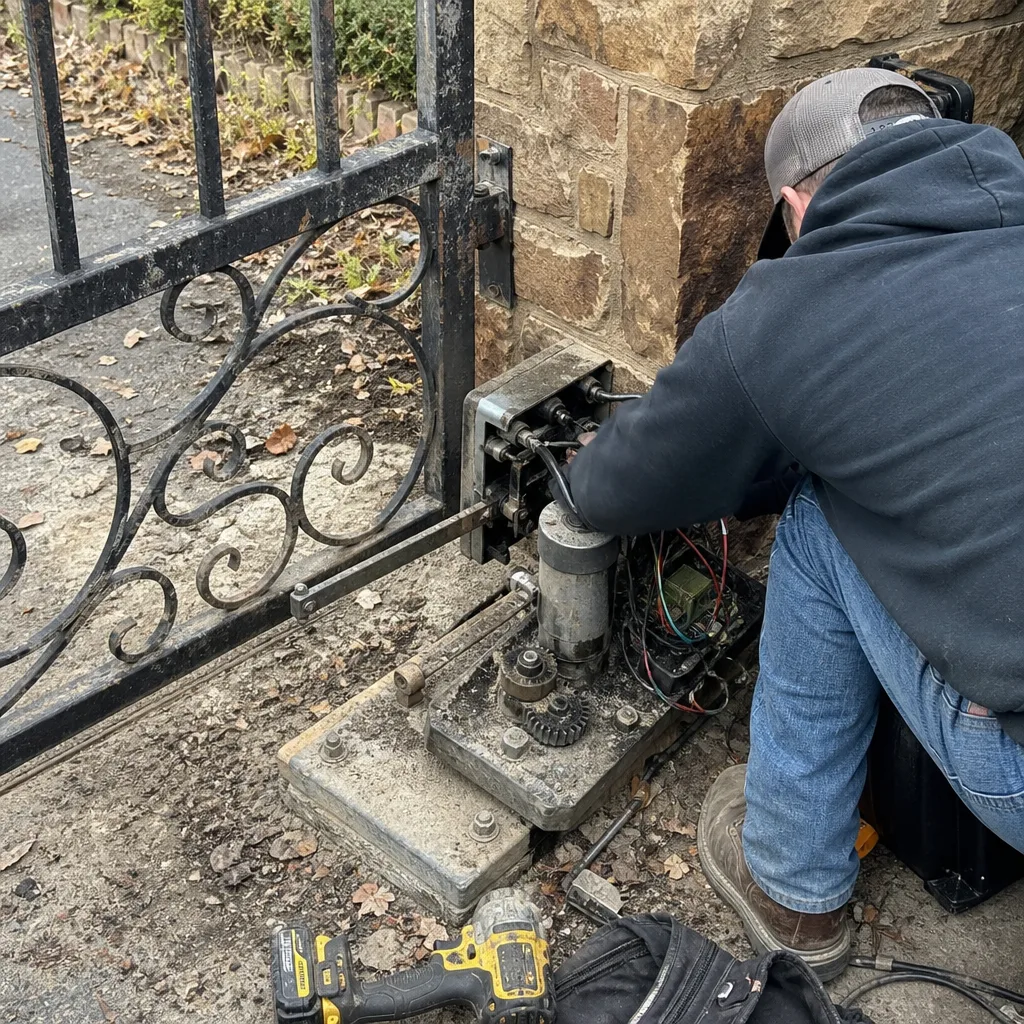 Before
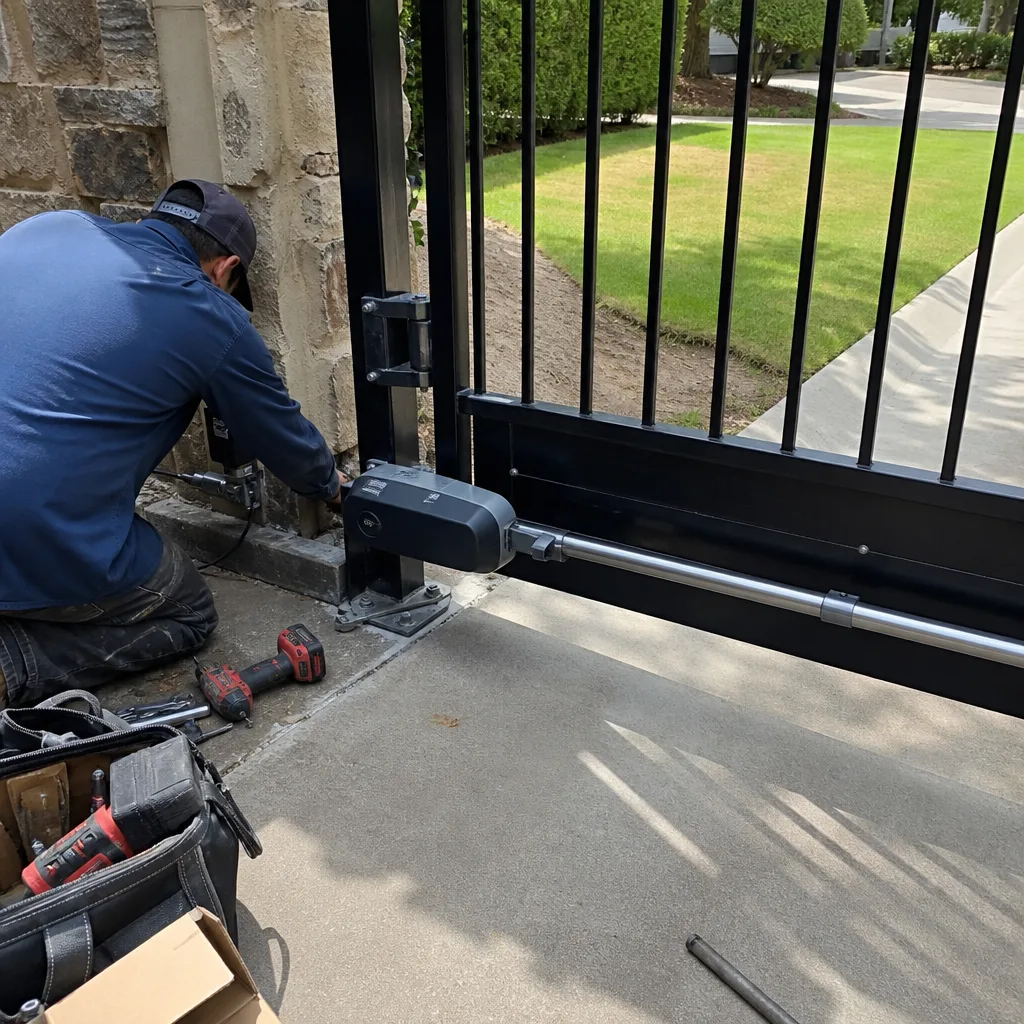 After
After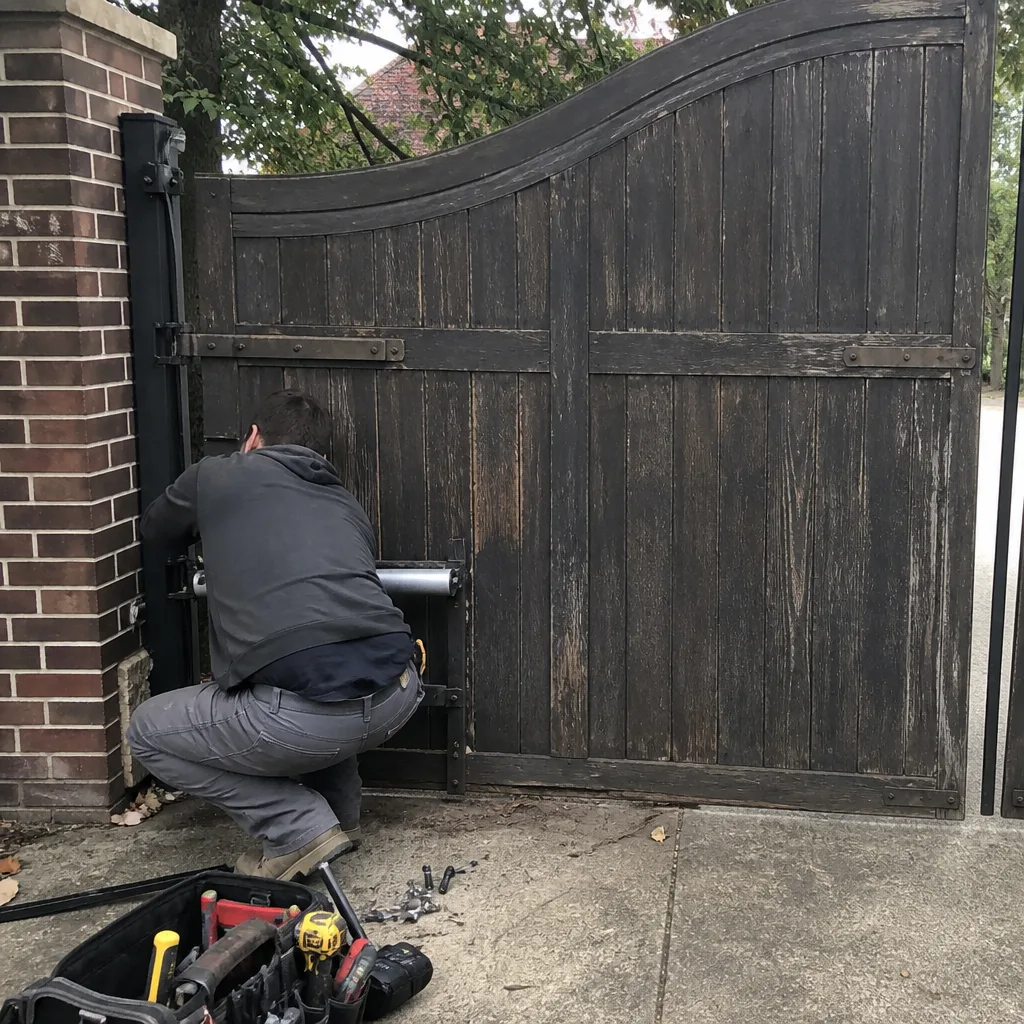 Before
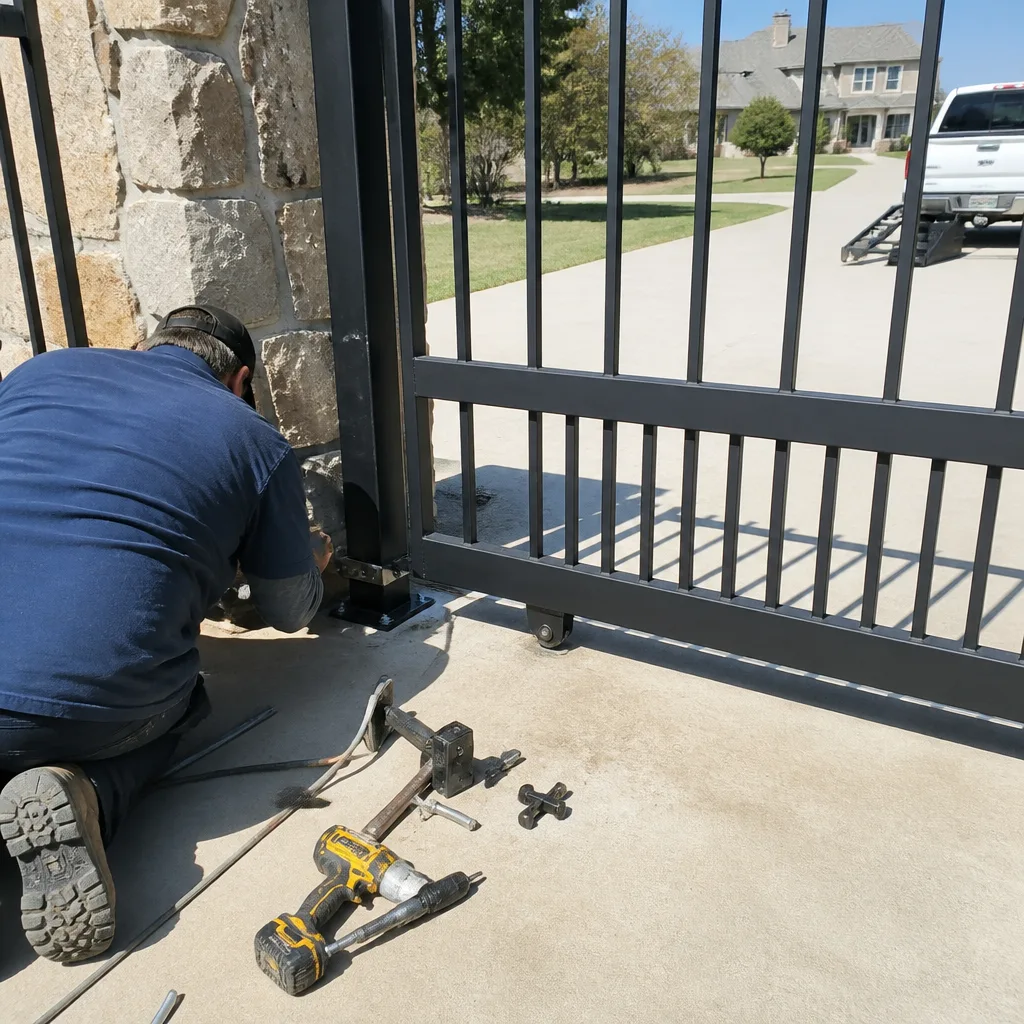 After
After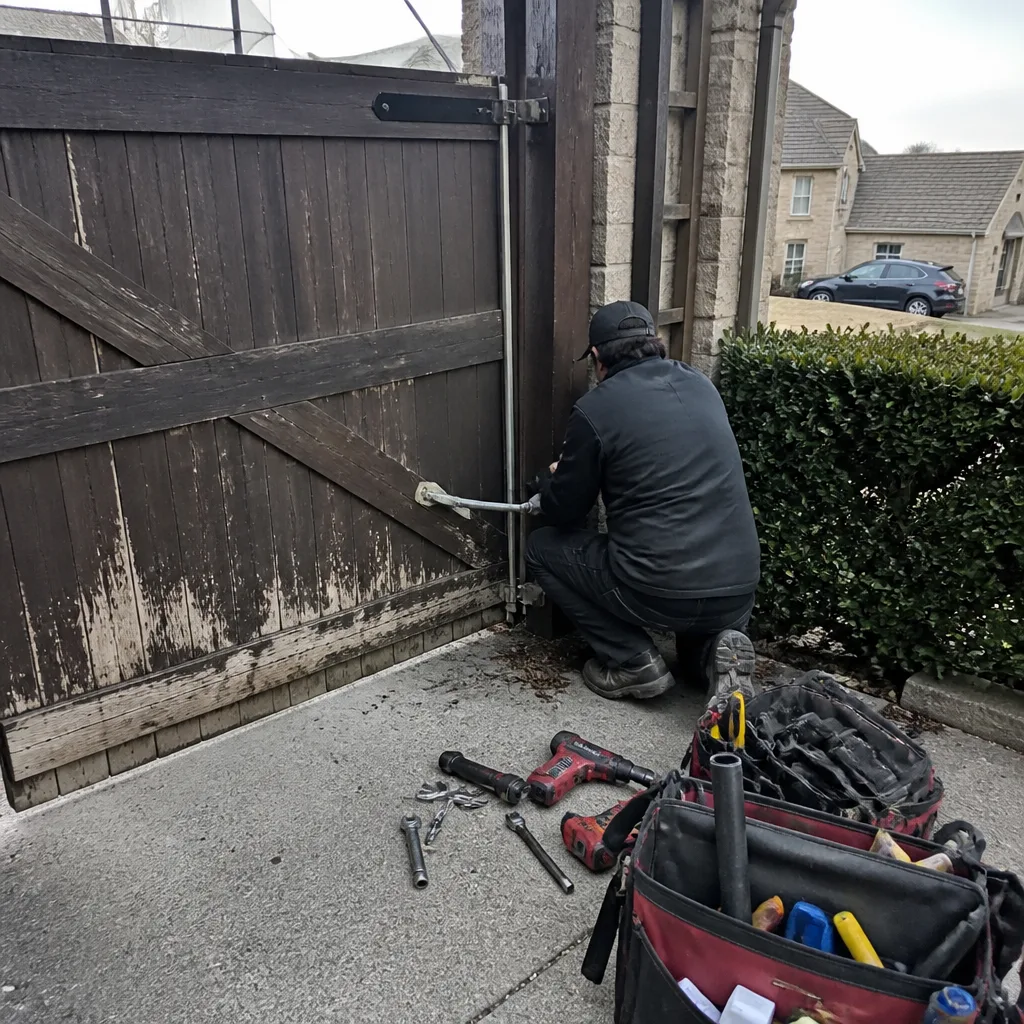 Before
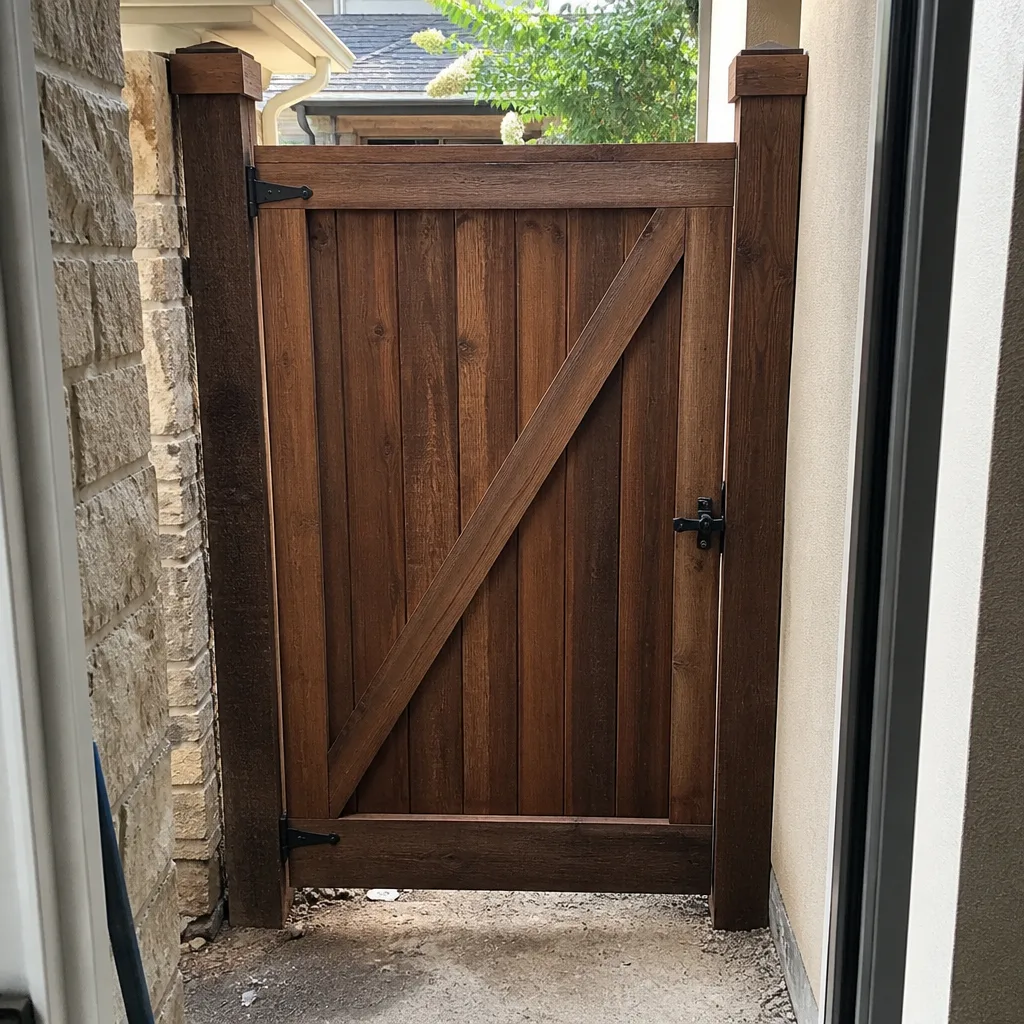 After
AfterGate Repair Warning Signs: A Southlake Homeowner’s Reference Guide
Most gate failures announce themselves weeks before the gate actually stops moving. A slight drag on the track, a new squeak from a hinge, a motor that hums a half-second longer than it used to. Homeowners in Southlake often write these off as normal wear until the morning the gate won’t open and the car is stuck in the driveway. This guide walks through what those early warnings sound like, look like, and feel like, so you can catch a small repair before it becomes a full replacement. By the end, you’ll know which signs mean “keep an eye on it,” which mean “call this week,” and which mean “don’t touch it until a professional gets here.”
Quick Answer
The most common early warning signs of gate trouble are a gate that moves slower than it used to, scrapes or drags along the ground, hesitates after a remote command, or makes a grinding, clicking, or humming noise from the motor. Any of these is worth a professional look within the week, because the underlying cause, whether it’s a failing hinge, a misaligned track, or a motor straining against a worn gear, is almost always cheaper to fix before it fully gives out. In Southlake’s clay-heavy soil, we also watch for posts shifting out of plumb, which throws gate alignment off and accelerates wear on every moving part.
Table of Contents
- The Sounds a Failing Gate Makes
- Movement Changes: Slow, Jerky, or Crooked
- Southlake Soil and Gate Post Movement
- Remote and Opener Delays
- Rust, Paint Failure, and What They Mean
- Photo Eyes, Safety Edges, and Sensor Failures
- Repair vs. Replacement: How to Think About Cost
- Common Mistakes to Avoid
The Sounds a Failing Gate Makes
A healthy gate is quiet. Not silent, exactly, but predictable. The motor has an even note, the wheels roll without complaint, and the gate settles into its closed position with a soft clunk. When something starts to fail, the sound changes first. Here are the noises we hear most often on service calls around Southlake, and what each one usually means.
Squealing or Screeching
This is almost always a dry bearing, a dry hinge, or a wheel that has stopped rolling and started sliding. The fix is often simple: clean the part, lubricate it properly, and check for wear. But if the squeal has been ignored for months, the dry part has been grinding metal against metal the whole time. A hinge pin can wear down enough that the gate leaf drops, and then the real repair starts. If your gate squeals every time it moves, don’t just spray it with WD-40, which washes out the existing grease and makes things worse in the long run. Use a proper lithium or silicone grease, or have the part serviced.
Clicking from the Opener
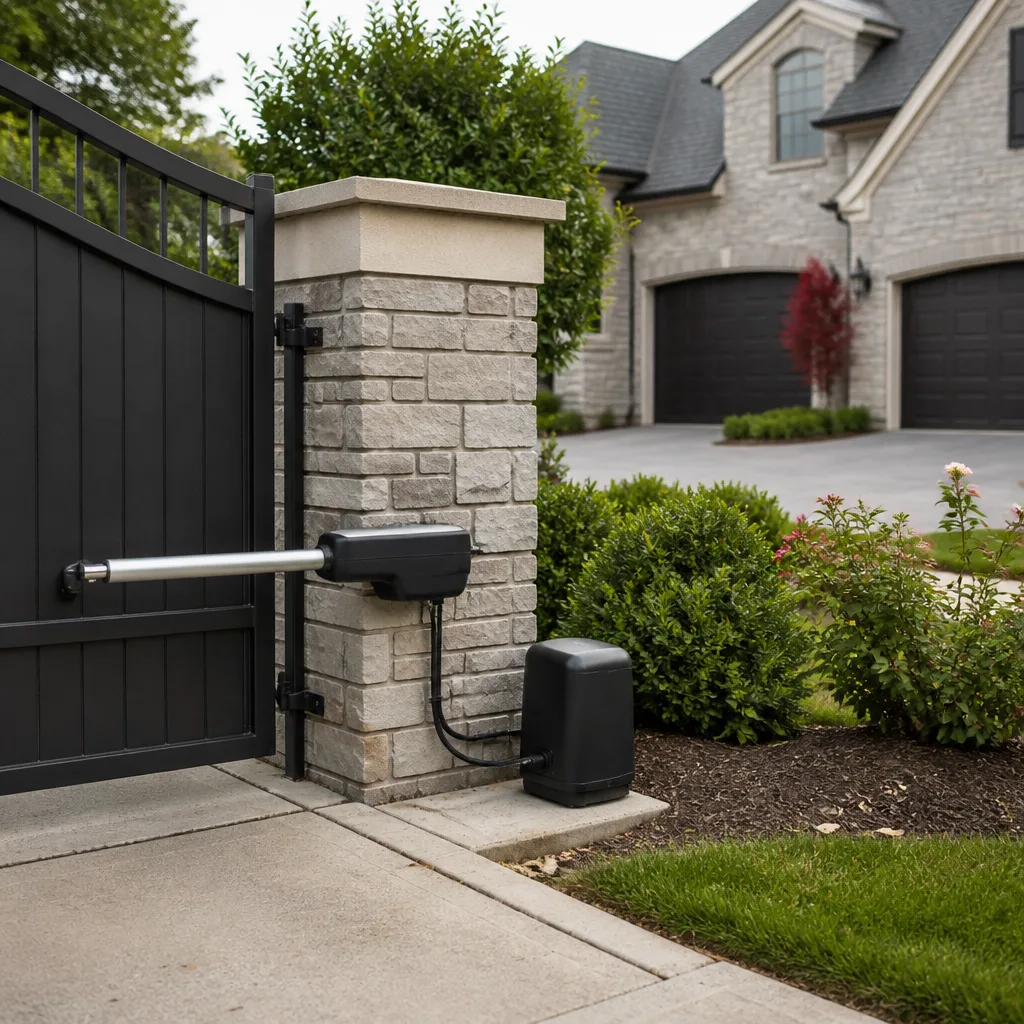
A repeated clicking sound when you press the remote usually means the opener’s internal relay is firing but the motor isn’t turning. On older Linear or BFT openers, this is often a capacitor that has lost its charge. On newer models, it can be a control board issue. Either way, the opener is trying to work and can’t. Continuing to press the remote repeatedly can overheat the relay and turn a repair into a replacement.
Grinding or Crunching
Grinding means something is being forced past something else. Most commonly, it’s the gear inside the opener stripping against the drive shaft, or a chain that has stretched and is slipping on the sprocket. A grinding opener will still move the gate for a while, but every cycle is chewing material. By the time the gate stops moving entirely, the gear is usually destroyed and the repair is more involved than it would have been a month earlier.
Humming with No Movement
A low hum when the opener is engaged but the gate doesn’t move is one of the clearest warnings you’ll get. The motor is getting power. It’s trying to turn. But something is holding the gate back. It might be a jammed wheel, a bent track, or a gear that has stripped inside the unit. Keep pressing the remote and the motor will burn out. This is a “stop using it and call” situation.
Movement Changes: Slow, Jerky, or Crooked
A gate’s speed is set at installation. If your gate used to close in 12 seconds and now takes 20, something has changed in the system. Slowing is rarely “just age.” It’s usually load. The motor is working against more resistance than it was designed for, and that resistance comes from somewhere specific.
What Slowing Usually Means
- Wheel or roller wear: Flat spots or seized bearings force the gate to drag instead of roll.
- Track misalignment: A section of track that has shifted makes the gate climb or bind at a specific point.
- Hinge wear: Worn hinges let the leaf sag, which increases friction at the latch side.
- Opener strain: A motor working against excess load will run slower and hotter, shortening its life.
Jerky Motion
A gate that stutters or starts and stops in fits is usually an opener or sensor issue rather than a mechanical one. On BFT and Viking systems, we see this when the control board is receiving intermittent input from a failing limit switch or photo eye. The board thinks the gate has hit an obstacle, stops, re-evaluates, then moves again. The gate is telling you its safety sensors are confused, and the usual fix is a switch replacement, not a new motor.
A Crooked Gate Leaf
Walk to the street and look at your gate straight on. If the gaps between the gate and the posts aren’t even, top to bottom, the gate is no longer hanging true. This could mean a worn hinge, a bent post, or a gate frame that has started to rack. A crooked gate puts uneven pressure on the opener and the track, which cascades into other failures. In our experience, this is the single most overlooked warning sign in Southlake, because from the driver’s seat the gate still opens and closes, and that feels like “working.”
Southlake Soil and Gate Post Movement
Southlake sits on expansive clay soil. If you’ve lived in the area for any length of time, you’ve seen what it does to sidewalks, driveways, and foundations. It does the same thing to gate posts. Clay expands when it’s wet and shrinks when it’s dry, and the movement doesn’t happen evenly. A gate post set in this soil can shift out of plumb over the course of a single wet spring or a long dry summer.
How to Check Your Posts
- Stand back and sight the posts. Look at each post against the vertical line of a fence section or a house corner. A post that leans even a few degrees is moving.
- Check the gap at the latch. If the gate used to latch cleanly and now the latch scrapes or misses, the post on the latch side has likely moved.
- Look at the ground around the post base. Fresh cracks in the concrete or soil pulling away from the post collar are both signs of movement.
- Watch the gate during a cycle. If the gate shifts or settles as it opens, the post may be flexing under load.
A leaning post is not a DIY fix. The post needs to be excavated, re-set, or replaced, and depending on the soil condition, the footing may need to be deeper or wider than the original. We’ve re-set posts in Southlake where the original footing was poured 18 inches deep in soil that needs 36 inches to stay stable through a North Texas summer. If the post is allowed to keep moving, it eventually pulls the gate leaf with it, and what began as a post repair becomes a full gate re-frame.
Remote and Opener Delays
When you press the remote and nothing happens for two or three seconds, the gate is telling you something. The delay itself is a symptom, not a quirk.
Common Causes of Delayed Response
- Weak remote battery: The easiest fix, and the first thing to check. A fading battery produces a weak signal, and the opener’s receiver hesitates.
- Receiver antenna damage: The small wire antenna on the opener can get bent, corroded, or knocked loose. Reception drops, and commands arrive slowly or not at all.
- Interference: New wireless devices in the area, especially anything operating on the 315 MHz or 433 MHz bands, can interfere with older opener systems. We’ve traced a few Southlake service calls to new landscape lighting transformers installed near the opener.
- Control board degradation: On older Ghost Controls and Linear boards, the relay that responds to the radio signal can get lazy with age. The command arrives, but the board is slow to act on it.
A remote that works intermittently is also a warning. It means the system is losing signal, not that the remote is “possessed.” Getting the opener serviced while the problem is still intermittent usually costs less than waiting until the receiver fails completely and the only way in is a manual release.
Rust, Paint Failure, and What They Mean
Iron gates in Texas live hard. Heat, humidity, and the occasional hailstorm all take a toll. But rust is the warning sign most homeowners in Southlake see and ignore, because it starts small.
Rust You Can Ignore
Light surface rust on a weld joint or a scratch is normal, especially on a gate that’s been in service for 15 or 20 years. It can be cleaned, primed, and touched up as part of routine maintenance.
Rust You Shouldn’t Ignore
- Rust at the bottom rail: Water pools there. If the bottom rail starts to swell or flake, the gate’s structural integrity is compromised, and the repair is a re-weld or a rail replacement, not a touch-up.
- Rust around hinge welds: Rust at the hinge is working on the exact point where all the gate’s weight is carried. A hinge that rusts through fails suddenly, not gradually.
- Paint that bubbles or peels in patches: This often means rust is working underneath the paint film. The paint didn’t fail; the metal below it is corroding and pushing the paint off.
What to Do
- Wash the gate. Plain water and a soft brush, twice a year. Removes the grit that traps moisture against the metal.
- Inspect after every storm season. Hail damage chips paint at the exact spots where rust gets its start.
- Don’t ignore the corners. Joints and corners hold water the longest. A small rust spot at a bottom corner is the classic starting point for a much larger repair.
- Touch up chips promptly. A wire brush, a rust-inhibiting primer, and a matching touch-up paint will stop the clock on a chip before it becomes a crater.
Photo Eyes, Safety Edges, and Sensor Failures
Every automated gate in Southlake is required to have safety devices that stop and reverse the gate if something is in its path. These devices are the photo eyes mounted near the ground and the safety edges on the leading edge of the gate leaf. When they fail, they don’t just stop working silently. They usually misbehave in ways that are easy to spot.
Warning Signs of Sensor Trouble
- The gate reverses immediately after closing. A photo eye that’s dirty, misaligned, or failing will tell the board there’s an obstacle when there isn’t one.
- The gate won’t close unless you hold the remote button or keypad key. This is the system’s fail-safe mode. It’s telling you a safety device is offline.
- The gate beeps continuously during operation. Many openers beep as a warning that a safety edge system has been triggered or is malfunctioning.
- The gate works sometimes and not others. A failing photo eye often gets worse in bright sunlight or after rain, which makes the problem feel random.
Sensor repairs are usually straightforward: clean or realign the photo eyes, or replace a worn safety edge strip. But we always recommend addressing sensor issues promptly, because a gate that’s operating without functional safety devices is a liability. North Texas cities enforce gate safety during inspections, and a gate that doesn’t reverse on contact is a serious hazard for kids, pets, and delivery drivers.
Repair vs. Replacement: How to Think About Cost
Every gate reaches a point where the math on repair versus replacement flips. In Southlake, where many homes are 20 to 30 years old, we’re seeing more and more gates that have reached that point. Here’s how to think about it without the sales pressure.
When Repair Makes Clear Sense
- The gate frame is structurally sound, and the post is plumb.
- The opener is less than 10 years old and from a brand with good parts availability.
- The problem is a single component: one hinge, one wheel, one control board.
- The repair cost is less than 30% of what a comparable new gate would cost.
When Replacement Is the Honest Recommendation
- The gate frame is rusted through in multiple places, or the bottom rail has failed.
- The posts have shifted and the footing needs to be re-poured.
- The opener is obsolete and parts are no longer available or are backordered indefinitely.
- The cumulative repairs over the past three years add up to more than half the cost of a new gate.
Typical Repair Cost Ranges in Southlake
| Repair Type | Typical Range |
|---|---|
| Hinge replacement (single gate) | $175-$350 per hinge, including welding and realignment |
| Wheel or roller replacement (per wheel) | $75-$150 per wheel |
| Photo eye replacement (pair) | $150-$275 |
| Safety edge replacement | $200-$400, depending on gate width |
| Control board replacement | $250-$600, depending on brand |
| Post re-set or replacement | $600-$1,500, depending on footing and soil condition |
| Full gate re-frame (welding new rails) | $800-$2,000, depending on size and steel gauge |
These are honest ranges for the Southlake market based on our work over the years. Your exact price depends on the gate’s size, the opener brand, and what we find when we look inside. What we won’t do is change the number after the work starts. The price is settled before a single bolt is turned. If a repair estimate looks too high to justify, we’ll tell you, and we’ll show you what replacement would cost so you can compare honestly. We also offer a free second opinion on any written estimate, which is useful when another company has quoted you something that doesn’t feel right.
Common Mistakes to Avoid
- Lubricating the track. Sliding gates are designed to run on dry track. Adding grease or oil to the track attracts grit and turns it into grinding paste, which wears the wheels faster. The lubrication points are the wheels, hinges, and chain, not the track surface.
- Pressing the remote repeatedly when the gate doesn’t respond. Each press sends current through a struggling relay or motor. Ten rapid presses can do more damage than a month of normal use.
- Propping a failing gate open with a block or a strap. A gate that’s tied open is putting constant lateral load on the hinges and post. The temporary fix becomes the permanent strain.
- Waiting until the gate stops moving entirely. The most expensive repairs we do in Southlake are the ones where the homeowner knew something was wrong for months and waited. A dragging gate becomes a burned-out motor. A squeaky hinge becomes a snapped leaf.
- Ignoring a leaning post because “the gate still works.” It works until the day it doesn’t, and that day usually arrives when the gate drops hard enough to bend the frame and destroy the latch.
- Buying parts online without confirming compatibility. A control board that looks right on a photo can be the wrong revision for your opener. By the time it’s installed and doesn’t work, the seller’s return window has passed.
- Using WD-40 on hinges and bearings. It’s a cleaner, not a lubricant. It flushes out the grease that was there and leaves the part drier than before. Use a proper grease.
When to Call a Professional
Call the moment you hear grinding, see a post that’s visibly out of plumb, or notice the gate no longer latches cleanly. These are not cosmetic issues, and they don’t self-correct. A gate that’s been grinding for two weeks is already more expensive to repair than it was when the noise started. A post that’s leaning is putting pressure on the gate frame every day it stays that way. If your gate has an automation system, the safety devices need attention from someone who understands how the board, the switches, and the motor interact. The springs, cables, and opener gearing on a heavy driveway gate carry enough tension to cause serious injury if they’re serviced incorrectly. We’ve been working on gates in Southlake long enough to know which repairs are routine and which need a careful hand. Ironworks Gate Co. offers free estimates on every repair, and the price is agreed before we start. If you’re worried about what you’re seeing, call (817) 580-8494. A live person answers.
Frequently Asked Questions
Most gate repairs in Southlake fall between $175 and $600 for common issues like hinge replacement, photo eye swaps, or control board work. Larger jobs, like a post re-set or a full gate re-frame, run from $600 to $2,000 depending on the gate’s size and the condition of the footing. The exact number depends on what we find when we look at the gate, and you’ll have a written price before any work starts. Call (817) 580-8494 for a free estimate.
For most common repairs, the answer is yes. We carry parts for the nine opener brands we service, including Linear, BFT, and Viking, on our trucks, and most jobs are completed in a single visit. Larger repairs that require ordering custom parts or welding a new frame section may take longer, but we’ll tell you that upfront. Call (817) 580-8494 and we’ll tell you whether we can get to it today.
A full installation from Ironworks Gate Co. includes removal of the old gate, inspection and re-setting of existing posts if needed, fabrication or installation of the new gate frame, hanging and trueing the leaf so it closes evenly, installation of the opener and safety devices, programming of remotes and keypads, and a final walkthrough so you know how everything works. The job carries our 90-Day Done Right Promise. Call (817) 580-8494 for a free measure and written price.
Yes. We run the power, wire the photo eyes and safety edges, program the opener, and test the system for proper reversal and obstruction detection. Every automated gate we install in Southlake is set up to stop and reverse when something is in its path, and we verify that before we leave. Call (817) 580-8494 to schedule a safety check or repair.
Most openers in the Southlake area last between 8 and 15 years, depending on the brand, how heavily the gate cycles, and whether the gate itself stays in alignment. A gate that drags or binds shortens the opener’s life by forcing the motor to work harder every cycle. Regular seasonal tune-ups, particularly before summer, extend opener life. We offer an $89 seasonal tune-up that includes lubrication, alignment checks, and safety-system testing.
Yes. We’re trained and equipped on nine major gate automation brands including Ghost Controls, BFT, and Linear, and our technicians can identify most openers by sight. Knowing the brand helps us bring the right parts on the first visit, but even without it, we can diagnose and service the system on site. Call (817) 580-8494 and describe what the gate is doing. We’ll take it from there.
The Bottom Line
Your gate tells you when something is wrong. A squeak, a grind, a delay, a lean; these are messages, not quirks. In Southlake, where clay soil shifts posts and North Texas sun bakes steel, the difference between a $200 repair and a $2,000 replacement is usually a matter of weeks, not years. Listening to the warnings when they start saves money and avoids the morning when the gate won’t open. The best outcome is a gate that operates so quietly and consistently that you never think about it at all. That’s the standard we’ve aimed for on every gate we’ve touched in Southlake. If you’re seeing or hearing any of the signs in this guide, call (817) 580-8494 for a free estimate. The price is settled before the work starts, and every job carries our 90-Day Done Right Promise in writing.
Written by Victor Salinas, Owner at Ironworks Gate Co., serving Southlake since 2013.