
Last updated August 25, 2026
Free on-site gate assessment - hinges, posts, and your LiftMaster or Nice gate operator checked before anything is quoted
The assessment is free and the quote is the invoice.

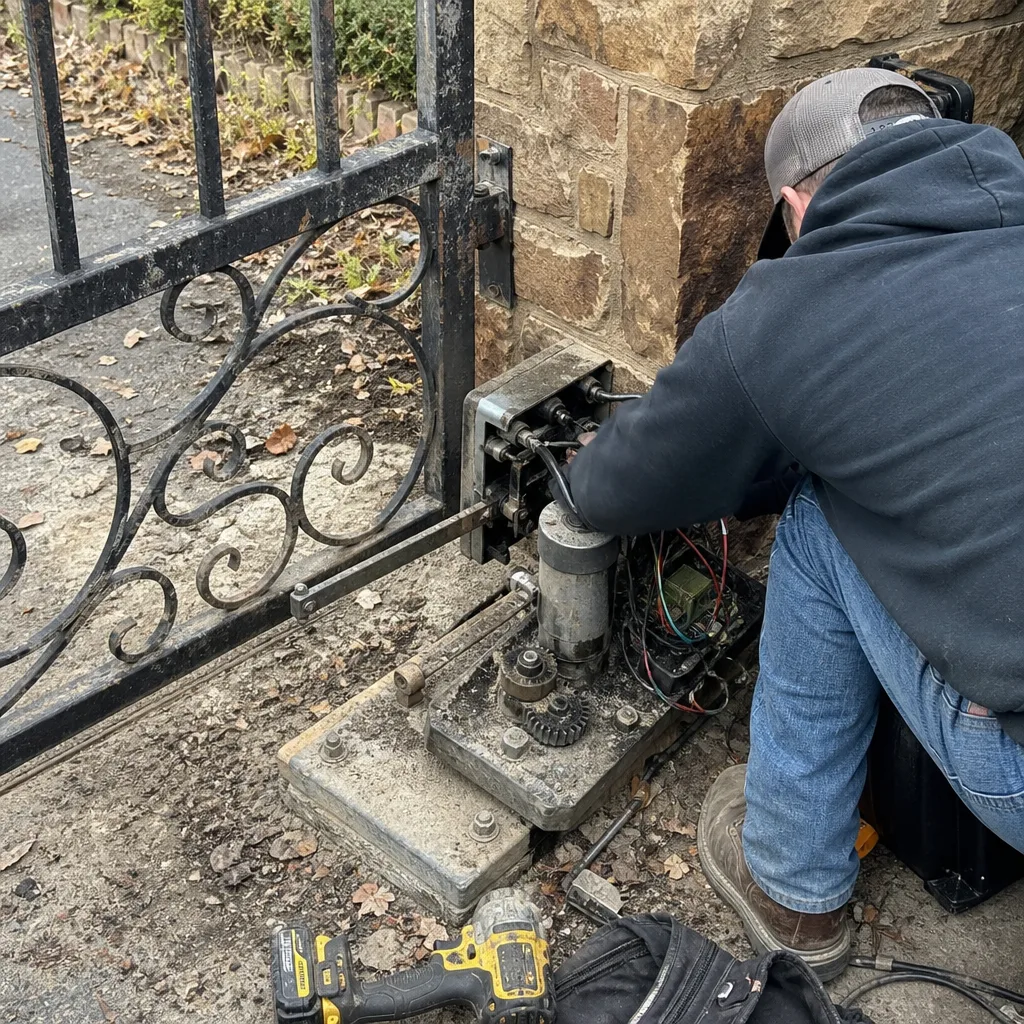 Before
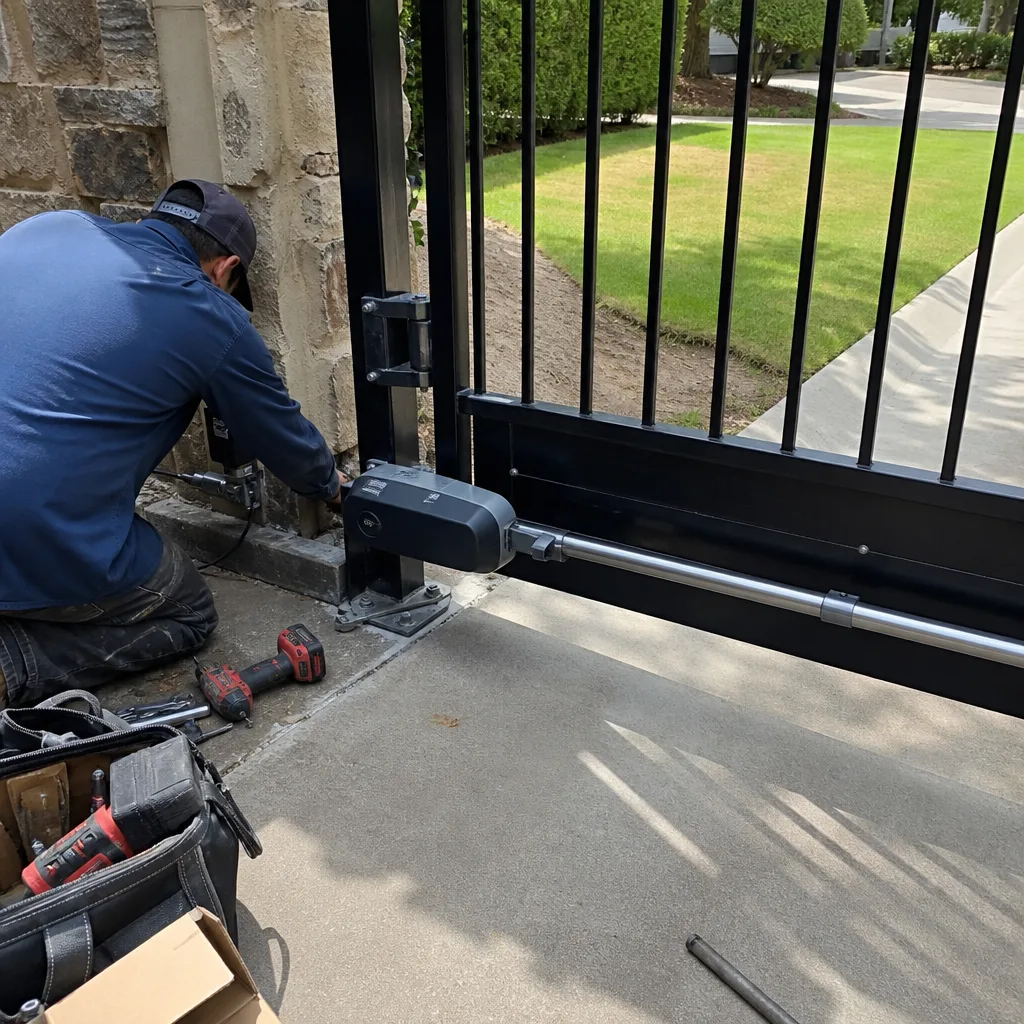 After
After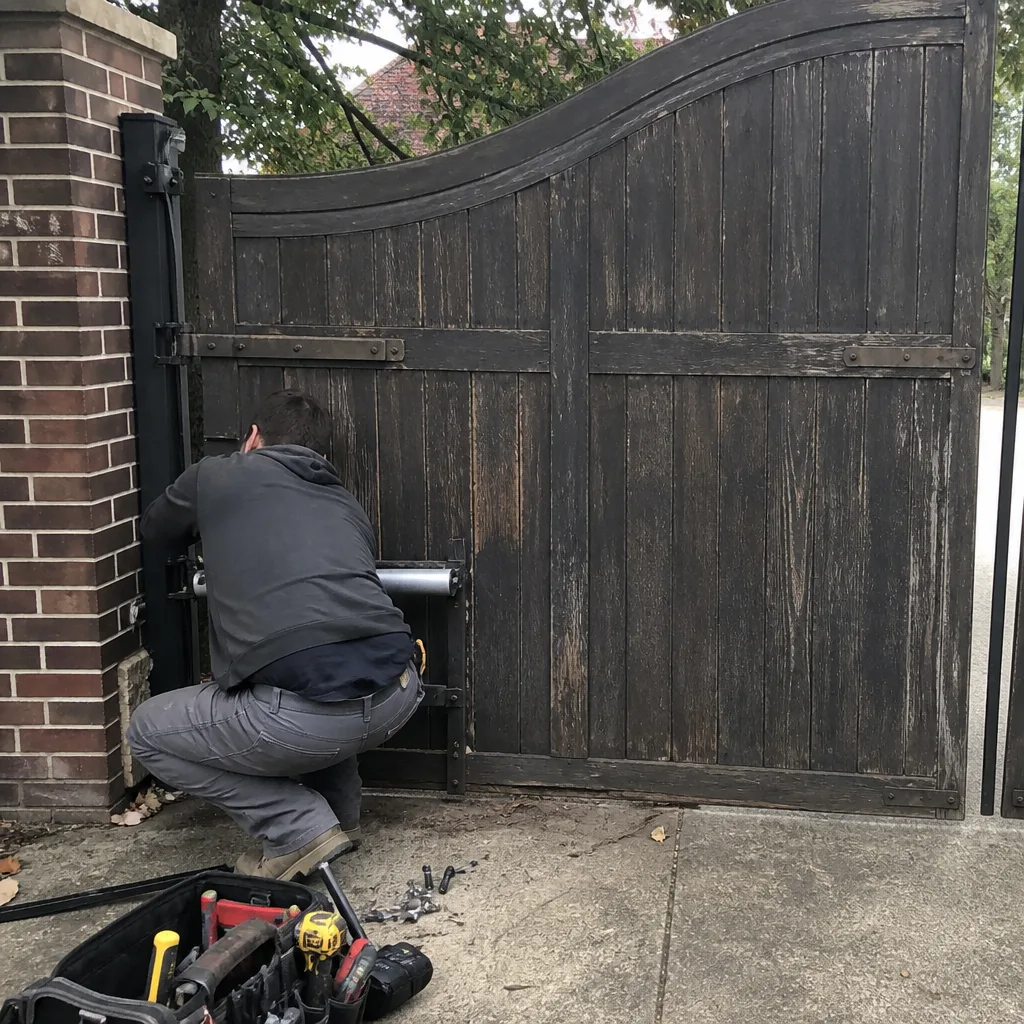 Before
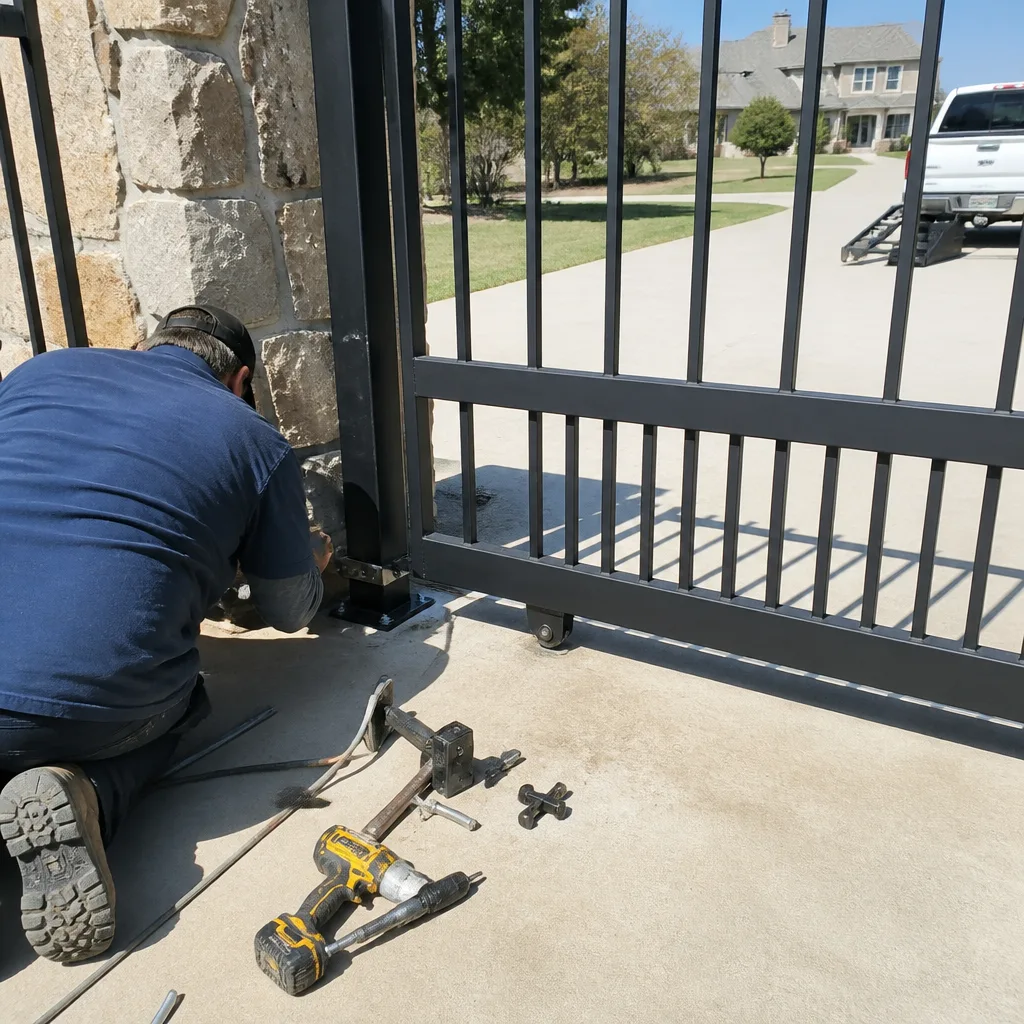 After
After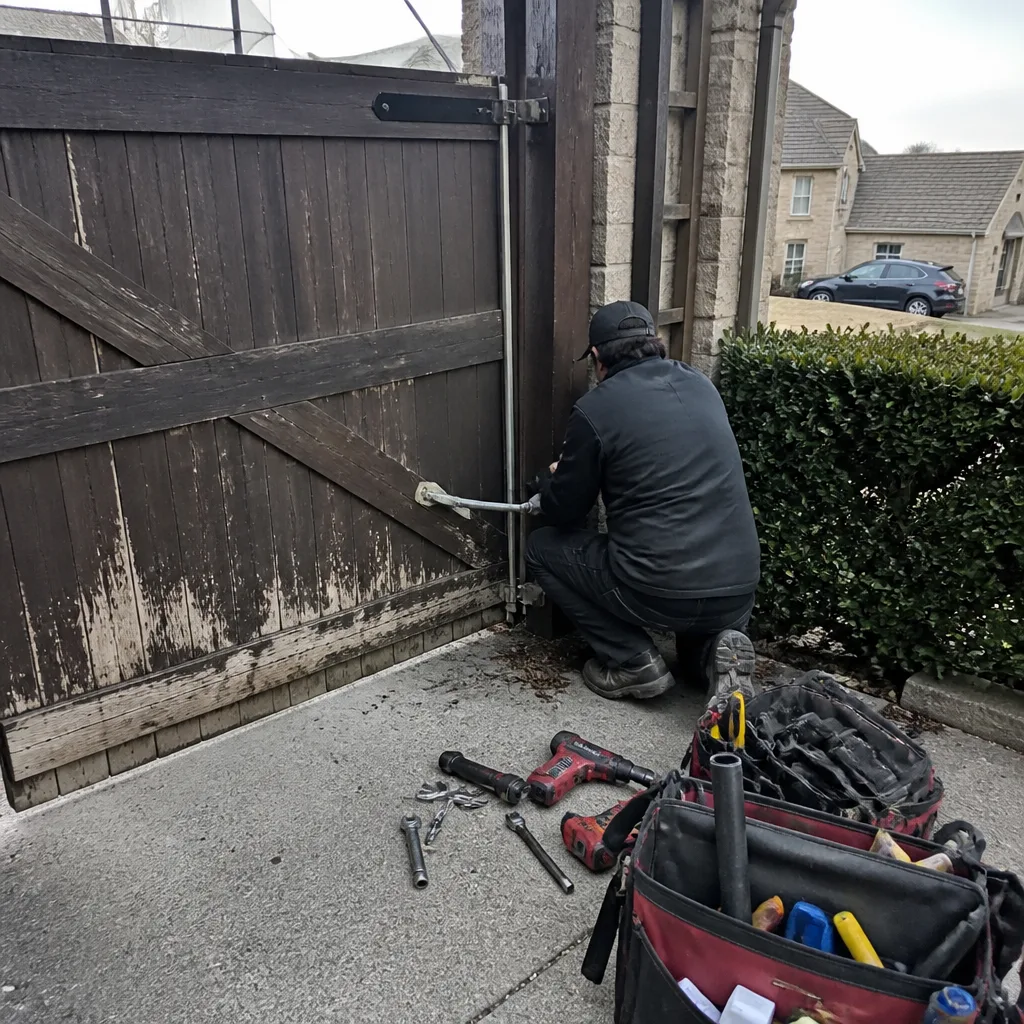 Before
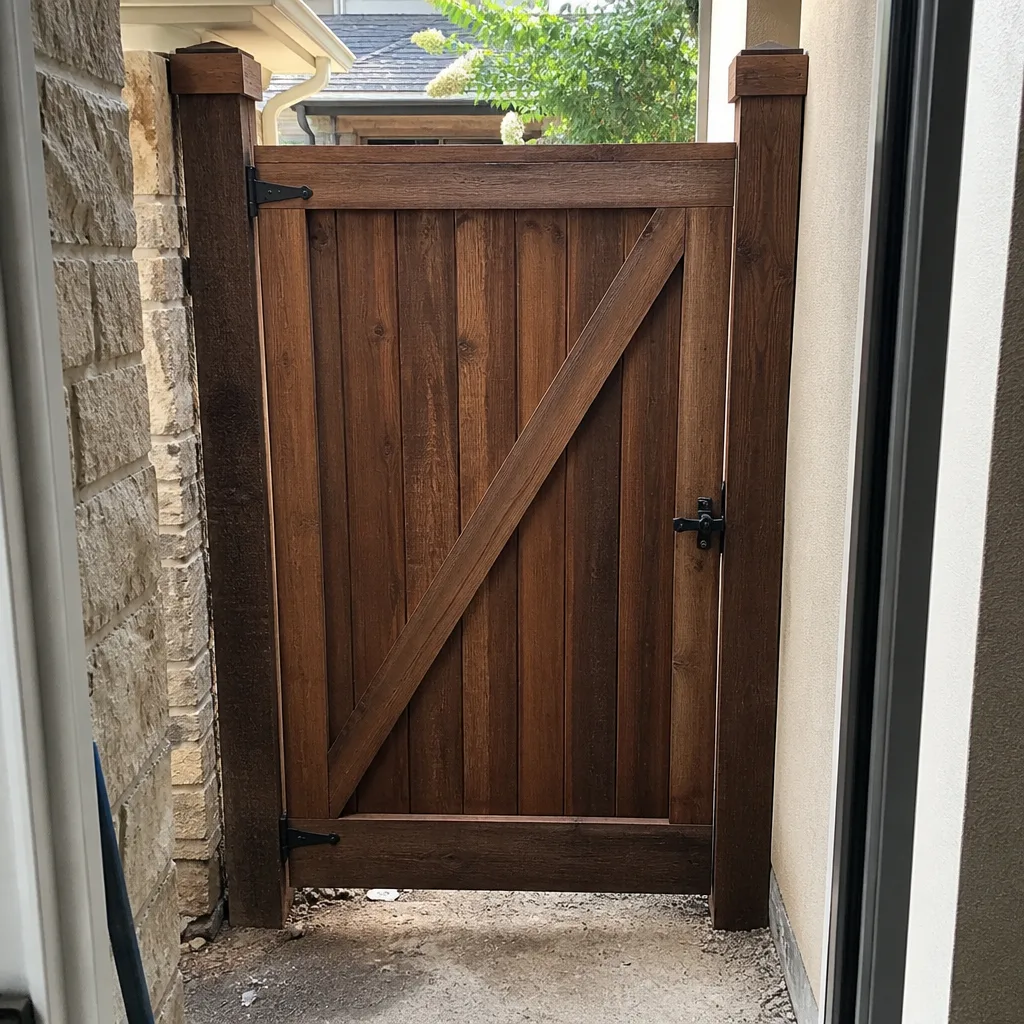 After
AfterGate Repair Permits, Codes & Inspections in TX: What You Need to Know
Here’s the counterintuitive truth most Texas homeowners discover too late: a gate repair that looks like simple welding or a motor swap can trigger permit requirements that a handyman will never mention, and a county inspector will. In Southlake and the surrounding Tarrant County communities, an automatic driveway gate is treated as more than a piece of metal on hinges. It’s a vehicle barrier, an electrical device, and in some cases a life-safety system. That means the rules governing it come from three directions at once: city code, county fire code, and the National Electrical Code. This guide lays out exactly what you need to know before turning a single bolt, so the job gets done once, passes inspection the first time, and doesn’t come back to bite you at resale.
Quick Answer
Most minor gate repairs in Texas, such as replacing hinges, rollers, or a keypad, do not require a permit. However, any work that alters the gate’s electrical supply, automation system, or structural frame may require a city permit and, in many municipalities, a final inspection. For Southlake homeowners specifically, the rule of thumb is simple: if the repair changes how the gate operates or how it’s powered, call the city before you call the welder.
Table of Contents
- When a Permit Is Required in Texas
- Southlake-Specific Permit Requirements
- Fire Code and Emergency Access
- Electrical Codes for Automated Gates
- Safety Devices: Photo Eyes, Edges, and Reversing Mechanisms
- What the Inspection Process Actually Looks Like
- HOA Rules and Private Covenants
- Common Mistakes to Avoid
- When to Call a Professional
- Frequently Asked Questions
- The Bottom Line
When a Permit Is Required in Texas
Texas doesn’t have a single statewide gate permit code. Gate regulation falls to each city, and the rules vary enough that two homes three miles apart can have entirely different requirements. The general pattern across Tarrant County, Dallas County, and the rest of the state follows a consistent logic: a permit is triggered when the work affects safety, structure, or electricity.
Here’s the practical breakdown of what typically needs a permit:
- New gate installation, including the posts, frame, and mounting hardware, requires a building permit in nearly every incorporated Texas city.
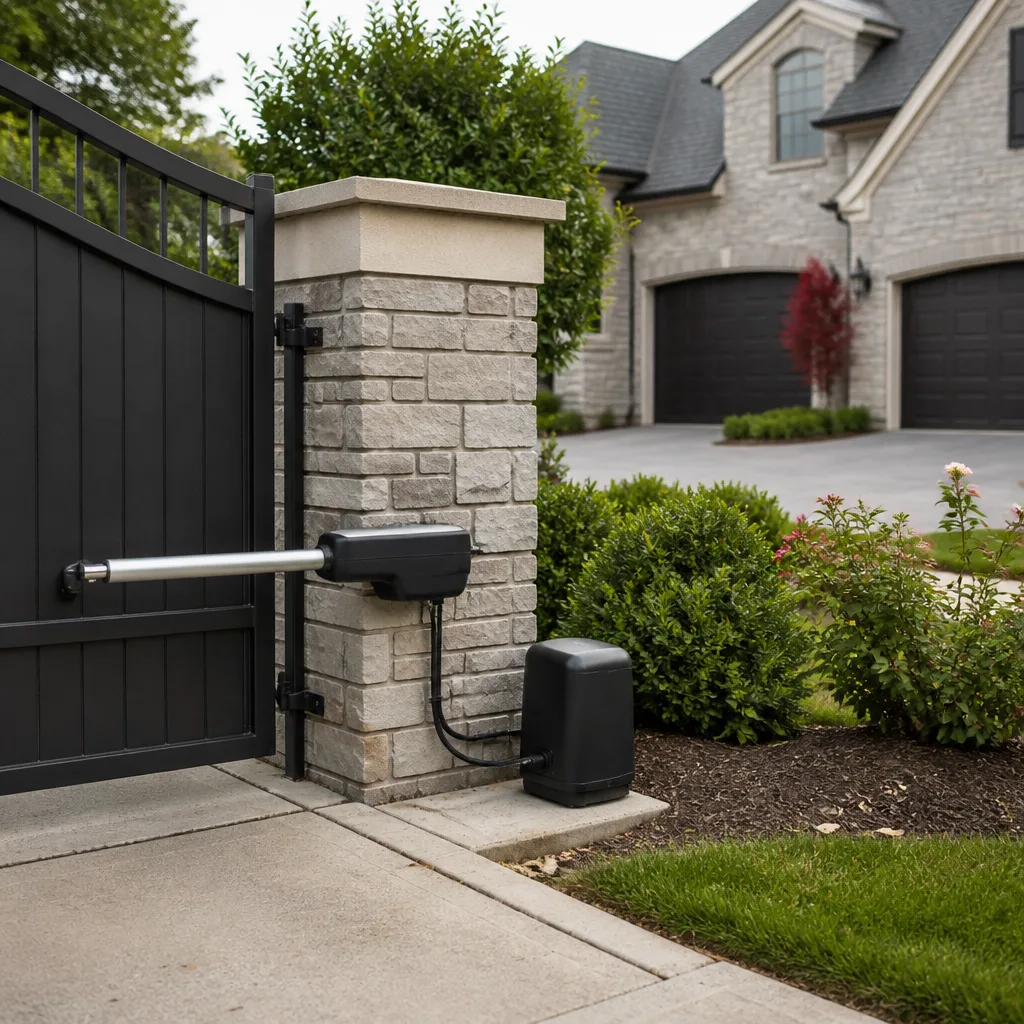
- Adding or replacing an automatic opener requires an electrical permit, because the motor, control board, and power supply all fall under the National Electrical Code.
- Modifying the gate’s structural frame, such as welding new steel sections, changing the gate’s size, or replacing the post footings, requires a building permit.
- Adding access control, like a keypad, telephone entry system, or vehicle loop detector, may require an electrical permit, depending on how the wiring is run.
- Running new conduit or power lines to the gate always requires an electrical permit.
What doesn’t need a permit, in most cases:
- Replacing a worn hinge or bearing with a like-for-like part.
- Replacing a battery in a solar-powered opener.
- Adjusting the gate’s travel limits or force settings.
- Lubricating rollers, tracks, and chains.
- Replacing a broken wheel or caster with an identical unit.
In our experience across Southlake, Westlake, Keller, and Grapevine, the most common permit surprise happens with opener replacements. A homeowner assumes swapping a dead LiftMaster for a new one is routine maintenance. The city sees it as new electrical work. When the home is sold years later, the title company’s inspection flags the unpermitted opener, and the seller is stuck paying for a retroactive permit plus any corrections. That retroactive permit typically costs 1.5 to 2 times the original fee.
Southlake-Specific Permit Requirements
Southlake operates under its own building code amendments, and the city has a reputation for being thorough. If you live within Southlake city limits, your gate project falls under the Southlake Building Services Department, which enforces the 2021 International Residential Code with local amendments, plus the National Electrical Code (NEC) as adopted by the state.
For Southlake homeowners, here’s what the city requires for gate work:
- Building permit for any new gate structure, any structural modification, or any replacement of gate posts or footings. The permit application requires a site plan showing the gate location, setback distances from the property line and public right-of-way, and the gate’s swing direction.
- Electrical permit for any automated gate installation or repair that touches the power supply, control board, or line-voltage wiring. Low-voltage landscape lighting running in the same trench does not exempt the gate wiring from review.
- Setback compliance: Southlake requires driveway gates to be set back far enough from the street that a vehicle can pull completely off the public right-of-way while waiting for the gate to open. The exact setback distance depends on your lot’s zoning, but a common figure is 20 to 25 feet from the back of the curb for a standard single-family lot. A gate that opens outward toward the street may require a larger setback or be prohibited entirely on certain collector roads.
- Fire access: any gate across a driveway serving a home more than 100 feet from the street, or any gate wider than 16 feet, must include a fire department override. In Southlake, that typically means a KNOX key switch, a siren-activated sensor, or both.
The permitting process in Southlake is not a paper maze, but it is not instant either. A gate permit typically takes 5 to 10 business days for review. An electrical permit for an opener is often quicker, sometimes 2 to 3 business days. The inspection itself is scheduled after the work is complete, and the inspector will check the gate’s clearances, the safety devices, the grounding, and the mounting of the operator. We’ve seen Southlake inspectors require photo eye height adjustments of less than an inch. They check.
If you’re unsure whether your gate project needs a Southlake permit, call the Building Services Department before you start. They answer the phone. And the answer you get is free, which is cheaper than the double-fee for retroactive permitting.
Fire Code and Emergency Access
Here’s the part of gate code that surprises homeowners most: the fire marshal has more authority over your driveway gate than the building department does. A gate that blocks emergency vehicles is a life-safety problem, and Texas fire marshals do not negotiate on this.
The governing standard is the International Fire Code, adopted by Southlake and most surrounding cities with local amendments. The practical rules that affect a residential driveway gate:
- Fire department override: any automatic gate serving a single-family home must allow fire personnel to open it from outside. The accepted methods are a KNOX key switch, a keyed switch matching the local fire department’s key system, or a siren-activation sensor that opens the gate when it detects approaching emergency lights and sirens.
- Manual release: the gate operator must include a manual release mechanism that lets the gate be pushed open by hand when power is out. This is not optional, and inspectors test it during the final walk-through.
- Gate width and setback: in most Texas cities, a residential driveway gate must be set back far enough that a fire engine can pull off the street without blocking it while the gate opens or is overridden. Narrow streets in older Southlake neighborhoods make this a live issue, and the fire department will measure it.
- Fall zone restrictions: if the gate is a sliding or cantilever design, the fire code may restrict where the gate’s parked position sits in relation to the fire hydrant. A gate that slides into a position blocking hydrant access is a code violation.
In our experience with older Southlake properties, the most common fire-code correction involves a gate that was installed decades ago, before the current fire code was adopted. The gate swings fine and the motor works, but there is no KNOX switch and no siren sensor. The homeowner discovers the problem when a fire inspection happens after a kitchen remodel pull, or when they try to sell the house. The fix involves adding the override hardware, which is a straightforward retrofit, but it must be done before the inspection, not after.
Electrical Codes for Automated Gates
An automatic gate operator is an electrical appliance, and in Texas it is wired under the same National Electrical Code that governs your panel, your outlets, and your pool pump. That means the electrical work on a gate is not something to trust to a fence contractor who doesn’t have an electrical license on staff.
The code requirements that matter for gate automation:
- Dedicated circuit: the gate operator must be on a dedicated circuit or a circuit with adequate capacity, protected by a GFCI where required. In outdoor locations, GFCI protection is standard.
- Approved wiring methods: the power run from the house to the gate must be in conduit rated for direct burial or installation below grade. In Texas, UF cable buried at the correct depth is common for residential gates, but the depth requirement (typically 18 to 24 inches depending on the conduit) is enforced. Shallow-buried Romex is a code violation and a fire risk.
- Proper grounding: the gate frame and the operator chassis must be grounded. An ungrounded steel gate acts as a lightning rod in a Texas thunderstorm, and the surge that follows can take out the control board, the keypad, and anything else on the circuit.
- Disconnect means: a service disconnect switch must be located within sight of the gate operator, so power can be cut without walking back to the main panel. Most inspectors in Tarrant County check for this specifically on new installations.
- Low-voltage separation: low-voltage wiring for keypads, photo eyes, and vehicle loops must be separated from line-voltage wiring by a barrier in any shared junction box. Mixing them in the same conduit is a code violation that fails inspection.
For a homeowner in Southlake replacing an opener, the practical question is usually whether the existing power run is still code-compliant. We regularly see homes built in the 1980s and 1990s where the original gate wiring was installed before current code, and the conduit is undersized or the GFCI protection is missing. If we’re replacing the opener, we flag it and fix it, because a new opener on an old electrical run fails inspection, and it’s also a hazard.
Safety Devices: Photo Eyes, Edges, and Reversing Mechanisms
This is the section that matters most for the people who live at the property, and it’s where the code is most specific. Automated gates can kill. A 1,200-pound steel gate moving under motor power has enough force to trap a child, a pet, or an adult against a post, and the safety requirements in the code exist because every one of those accidents has already happened somewhere.
The UL 325 standard, which Texas cities reference through the building code, requires every automatic gate operator to include:
- Reversing mechanism: the gate must reverse direction when it encounters an obstruction, applying no more than a specified amount of force. The force setting is adjustable on most operators, and it must be set correctly for the gate’s weight and travel. An operator set too high will push through an obstruction instead of reversing.
- Photo eyes or edge sensors: at minimum, a monitored photo eye is required across the gate opening in the entrapment zone, which is the area where the gate approaches the post or wall. Many installations use a combination of photo eyes and pressure-sensitive edge sensors on the leading edge of the gate.
- Alarm or audio warning: the operator must sound an audible alarm when the gate is obstructed twice in a row or when a fault is detected. This is a UL 325 requirement, and a missing alarm is a failed inspection.
- Manual release tested: the manual disconnect must allow the gate to be opened by hand with a reasonable amount of force. An inspector will test this, and a gate that binds when released fails.
These requirements apply whether the opener is a LiftMaster, a Viking, or any of the other nine brands we service. The safety devices are not brand-specific, but the way they integrate is. A Monitored photo eye on a BFT operator wires differently than on a Linear operator, and getting the wiring wrong either disables the safety circuit or causes nuisance reversals. That’s one reason we insist on sending a technician who’s trained on the specific brand on the driveway, not a generalist guessing at the terminals.
Here’s the Southlake angle that makes safety devices a bigger deal than in other parts of Texas: the city’s inspection practices are known to be strict on entrapment protection. We have seen Southlake inspectors reject a final on a gate installation because the photo eye was mounted at 6 inches instead of the 4 to 6 inch range specified in the manufacturer’s installation instructions. This is not the kind of detail a homeowner thinking about permits will catch. The inspector will.
What the Inspection Process Actually Looks Like
If your gate project in Texas requires a permit, the permit includes at least one inspection. Here’s how the process unfolds, step by step, so nothing surprises you on inspection day.
- Permit issued: you submit the application, pay the fee, and the city approves the scope of work. In Southlake, the permit is valid for a set period, typically 180 days, and the work must be completed and inspected within that window or the permit expires.
- Rough inspection (if applicable): for new installations or structural modifications, the inspector comes out after the posts are set and the conduit is in the trench but before everything is covered up. They check post depth, footing size, conduit depth, and the location of the gate relative to the property line. If the trench is covered before the rough inspection, the inspector will require you to dig it back up.
- Electrical inspection: once the wiring is complete but before the operator is fully buttoned up, the inspector checks the circuit, the grounding, the disconnect, and the separation of line-voltage and low-voltage wiring. This inspection sometimes happens at the same time as the rough inspection for smaller jobs.
- Final inspection: the gate is operational, and the inspector tests everything. The gate travels through a full open and close cycle. The photo eye is obstructed with a test object and the gate must reverse. The manual release is operated. The fire department override is tested if one is required. The force setting is checked. Only after all of these pass does the project get signed off.
The final inspection is the same in Southlake as it is in Keller, Colleyville, and Grapevine, but the rigor varies by inspector. Some inspectors spend ten minutes. Others spend forty-five. The best way to pass on the first visit is to have the gate adjusted correctly by a technician who understands what the inspector is looking for, not a homeowner who read the manual once.
After the final inspection passes, the city closes the permit. The homeowner keeps the permit record for their files, because it will come up at resale. A closed permit is a selling point. An open permit is a problem.
HOA Rules and Private Covenants
In Southlake, the city code is only half the story. The other half is the HOA, and in a city where a large share of homes sit within a homeowners association, HOA approval is often a harder gate to pass than the city permit.
Here’s how HOA rules interact with gate work:
- Design review: most Southlake HOAs with architectural control committees require written approval before a new gate is installed or before the gate’s appearance is changed. A repair that restores the gate to its original condition usually doesn’t require HOA review. A repair that changes the look, like replacing a wooden gate with a steel one, usually does.
- Style and material restrictions: many HOAs prohibit certain gate styles outright. A common restriction is a ban on chain-link or temporary panels visible from the street. Another common rule prohibits gates that are taller than the fence line or gates with certain decorative features that read as commercial rather than residential.
- Automation restrictions: some HOAs restrict gate operators on shared or easement driveways, or require a specific actuator type for gates on corner lots. The HOA’s concern is usually noise, and a loud operator on a shared driveway can generate complaints that lead to a compliance letter.
- Setback and sightline rules: HOA covenants sometimes require a longer setback than the city does, because they’re concerned with how the closed gate affects the streetscape. A gate that sits too close to the street can block sightlines for neighbors pulling out of their driveways.
The practical advice for Southlake homeowners: check the HOA documents before you apply for the city permit. Some HOAs in this area can take 30 to 60 days to approve a design change, and if you get the city permit first and the HOA approval second, you’ve burned permit time waiting. The smart order is HOA first, then city.
We’ve helped homeowners in Southlake navigate HOA objections on gate replacement projects, and the most common fix is simple communication. The committee wants to know what the gate will look like from the street, what material it is, and whether it matches the neighborhood character. A clear answer to those three questions resolves most objections.
Common Mistakes to Avoid
After four decades of gate work in this region, here are the specific mistakes we see repeatedly, in order of how often they happen:
- Assuming a repair never needs a permit. The word “repair” sounds minor, but replacing an opener or re-welding a structural section can trigger permit requirements in Southlake. The city’s test is whether the work changes the gate’s operation or structure, not whether the homeowner thinks of it as a repair. Check before you start.
- Skipping the fire department override. Some homeowners view the KNOX switch or siren sensor as an optional add-on and decline it to save money. The fire code doesn’t treat it as optional, and the correction after a failed inspection costs more than the original installation would have.
- Burying the electrical run before the rough inspection. The inspector needs to see the conduit in the trench. Covering it early means digging it back up, and in Texas summers, that’s a miserable afternoon.
- Setting the force and limit adjustments too high. A gate that slams into the close position and doesn’t reverse on contact is a failed inspection and a genuine safety hazard. The UL 325 force limits exist for a reason, and inspector-tested gates fail when the force is set to push through obstructions rather than reverse.
- Ignoring the HOA until after the work is done. A gate installed without HOA approval can result in a demand to remove it, and in some associations, fines accrue while it stays. The HOA review in Southlake takes time, but it’s time you can’t avoid.
- Hiring a contractor who isn’t familiar with the local inspector’s expectations. Code knowledge is one thing. Knowing exactly which details the Southlake inspector checks, and which manufacturers’ specs they’re matching against, is another. A contractor from outside the area may do work that meets code generally but fails locally.
- Not keeping the permit record after the job is done. When you sell the house, the title company will ask about the gate. A closed permit answers the question. No permit record means a delay, a retroactive permit, or a negotiation with the buyer. Keep the paperwork.
When to Call a Professional
Most of this guide covers rules and code, but the practical takeaway is simple: gate work that touches structure, electricity, or automation is not a weekend project. If your gate’s posts are leaning, the opener is wired into the house’s electrical system, or the safety devices need to be integrated and tested, a permit will likely be involved, and a professional is the right call.
Specific situations that warrant calling a gate specialist rather than tackling it yourself: a structural crack in the gate frame or post, an opener that trips the breaker, a gate that won’t reverse on obstruction, any installation of a new operator or access control, and any situation where the city has already flagged the gate during an inspection.
Ironworks Gate Co. offers free estimates in Southlake, and we’ll tell you honestly whether your job needs a permit before any work begins. We quote the price upfront, in writing, before the first bolt is turned. Call (817) 580-8494 and a live person will answer, any hour, any day.
Frequently Asked Questions
In most Texas cities, yes. Replacing an automatic gate opener involves electrical work, which requires an electrical permit in Southlake and most surrounding municipalities. The permit is not optional, and the final inspection verifies that the wiring, grounding, and safety devices meet current code. Call (817) 580-8494 for guidance on whether your specific opener replacement needs a permit.
Southlake inspects gate installations when a permit is required, and the city’s inspectors are known for checking details closely. The final inspection includes testing the photo eyes, the reversing mechanism, the manual release, and the fire department override if one is required. Failing a detail like photo eye height is common, and correcting it before the inspector arrives saves time and a re-inspection fee.
Gate permit fees in Southlake vary based on the scope of work and the project valuation, but typical permit fees for a residential gate project run from roughly $100 to $400 depending on whether it’s a structural, electrical, or combined permit. The city’s Building Services Department can quote the exact fee. The bigger cost is a retroactive permit for work done without one, which can be 1.5 to 2 times the original fee.
A KNOX switch is a keyed override that lets fire department personnel open your gate from outside using a master key. It’s required on automatic gates in many Texas cities when the home is set back far enough that fire access is a concern, and Southlake enforces this through its fire code. If your gate lacks a KNOX switch or an equivalent override, it can fail inspection or delay emergency response.
Texas allows a homeowner to act as their own contractor on their own property in most cities, including filing for their own permits. However, the work must still pass inspection, and the electrical and safety code requirements are detailed enough that most homeowners find the learning curve steep. A gate that fails inspection costs more to fix than a gate installed correctly the first time by a professional.
The title company or buyer’s inspector will likely flag the gate during the sales process, and you’ll be asked to produce a permit record or correct the violation before closing. This can delay the sale by weeks, require a retroactive permit, and give the buyer leverage in negotiations. The cleanest answer is to permit the work when it’s done and keep the closed permit with your home records.
The Bottom Line
Gate permits, codes, and inspections in Texas are not as complicated as they seem, but they are not as forgettable as many homeowners hope. The shortcut that saves a few hundred dollars today becomes a sale-delaying problem years later. The discipline is simple: check with the city before structural, electrical, or automation work, respect the fire code, make sure the safety devices are right, and keep the permit record when it’s closed. For Southlake homeowners, that discipline is easier to maintain with a contractor who knows the local inspectors, carries the permit through the process, and stands behind the work in writing. That’s how we’ve done it for over 42 years, and it’s how we’ll do it for the next forty.
Written by Victor Salinas, Owner at Ironworks Gate Co., serving Southlake since 2013.