
Last updated August 25, 2026
Free on-site gate assessment - hinges, posts, and your LiftMaster or Nice gate operator checked before anything is quoted
The assessment is free and the quote is the invoice.

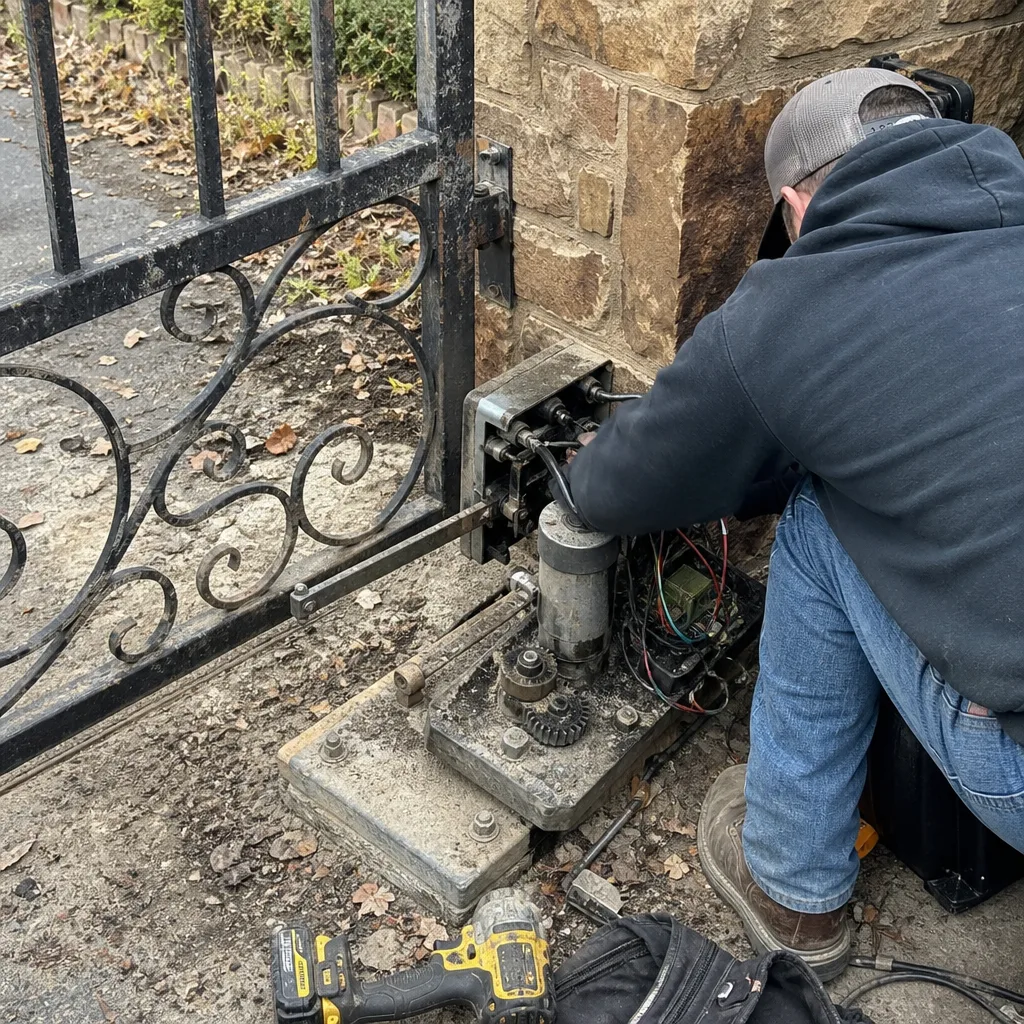 Before
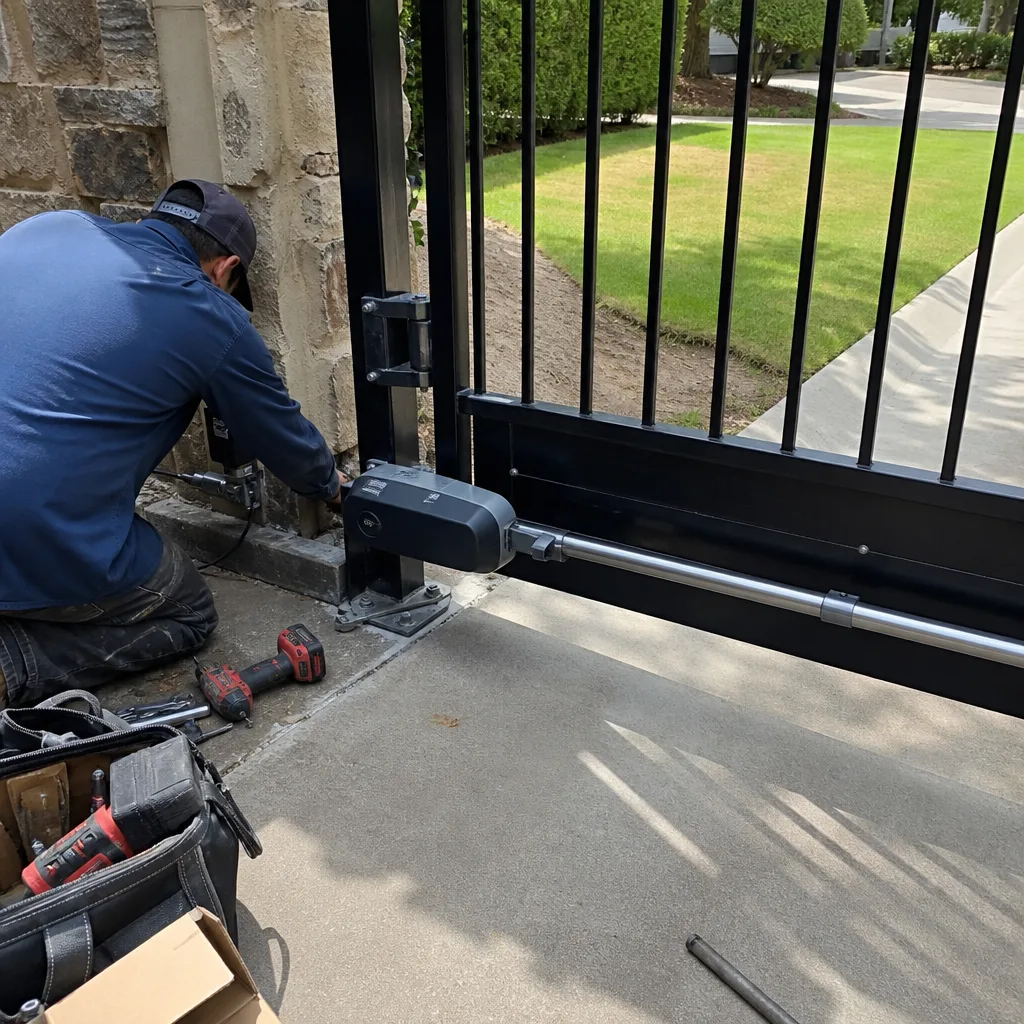 After
After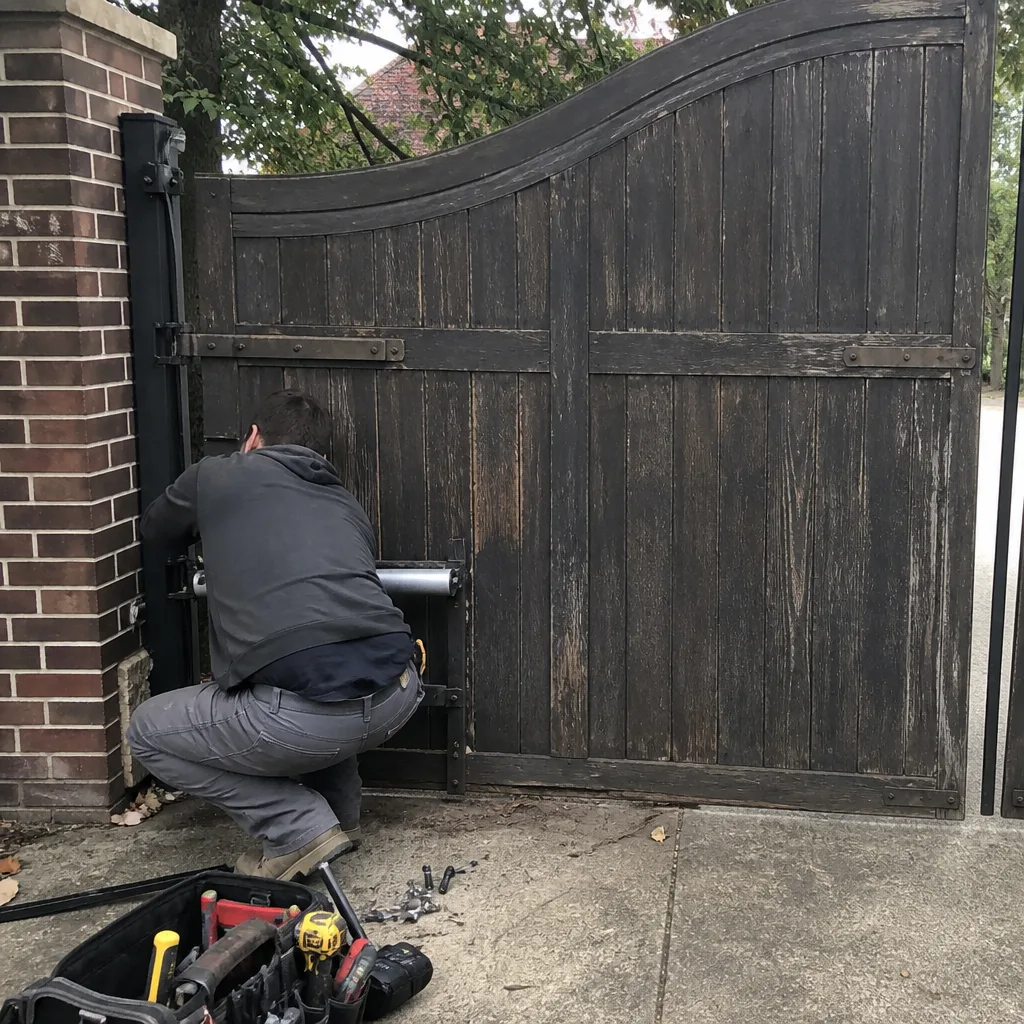 Before
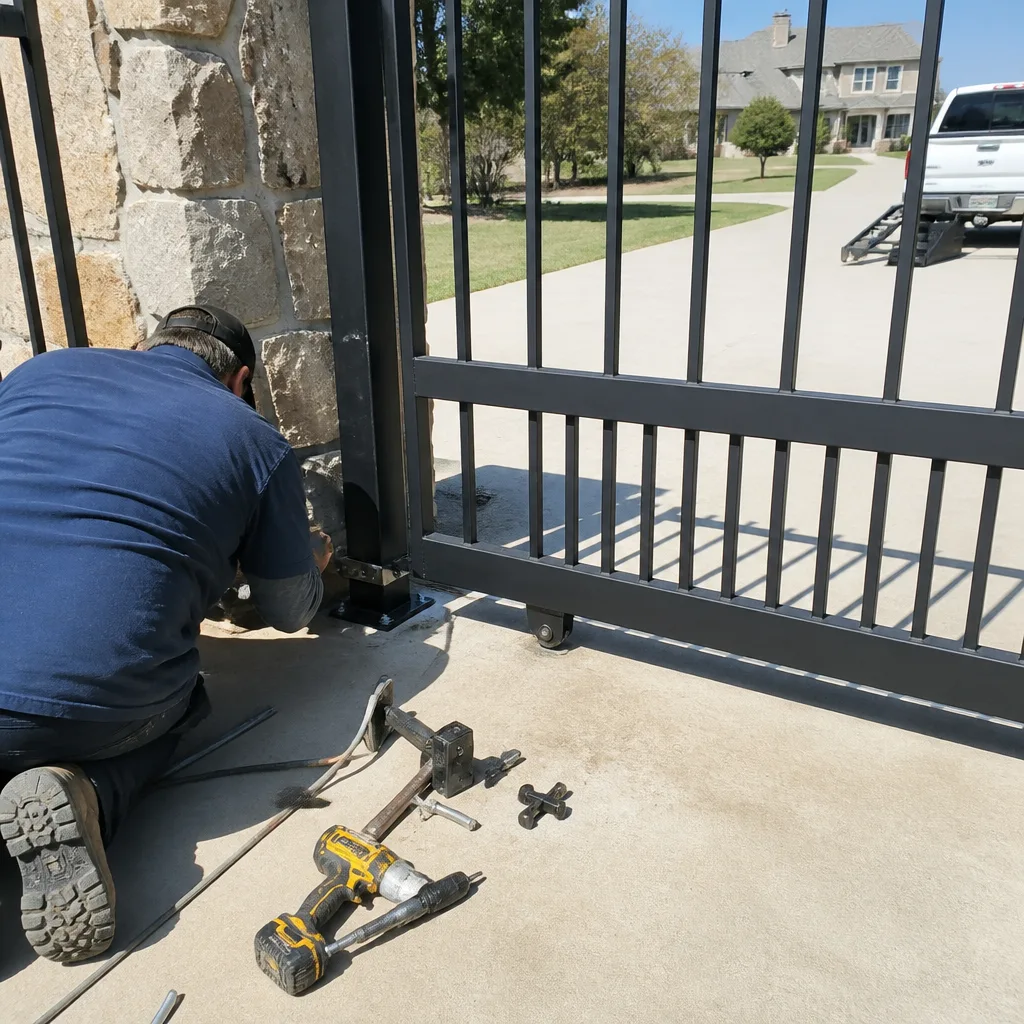 After
After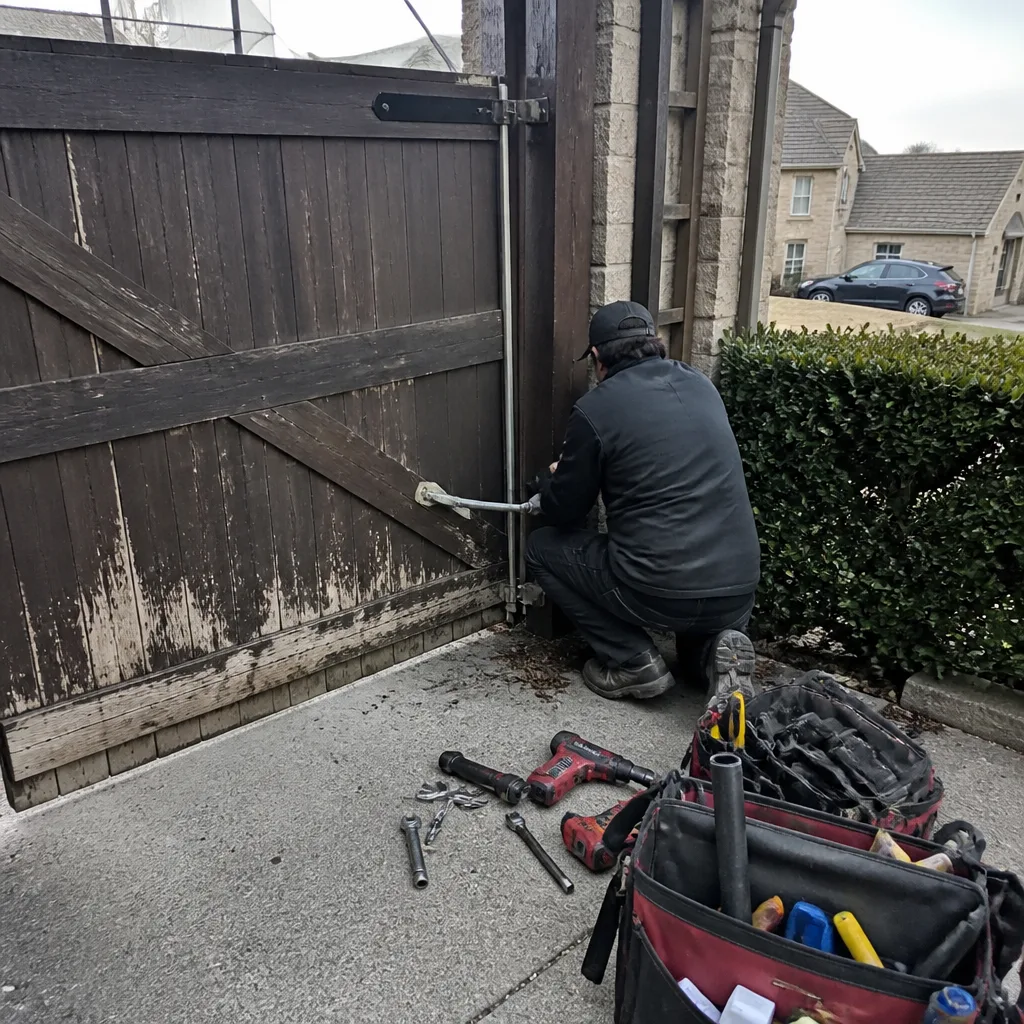 Before
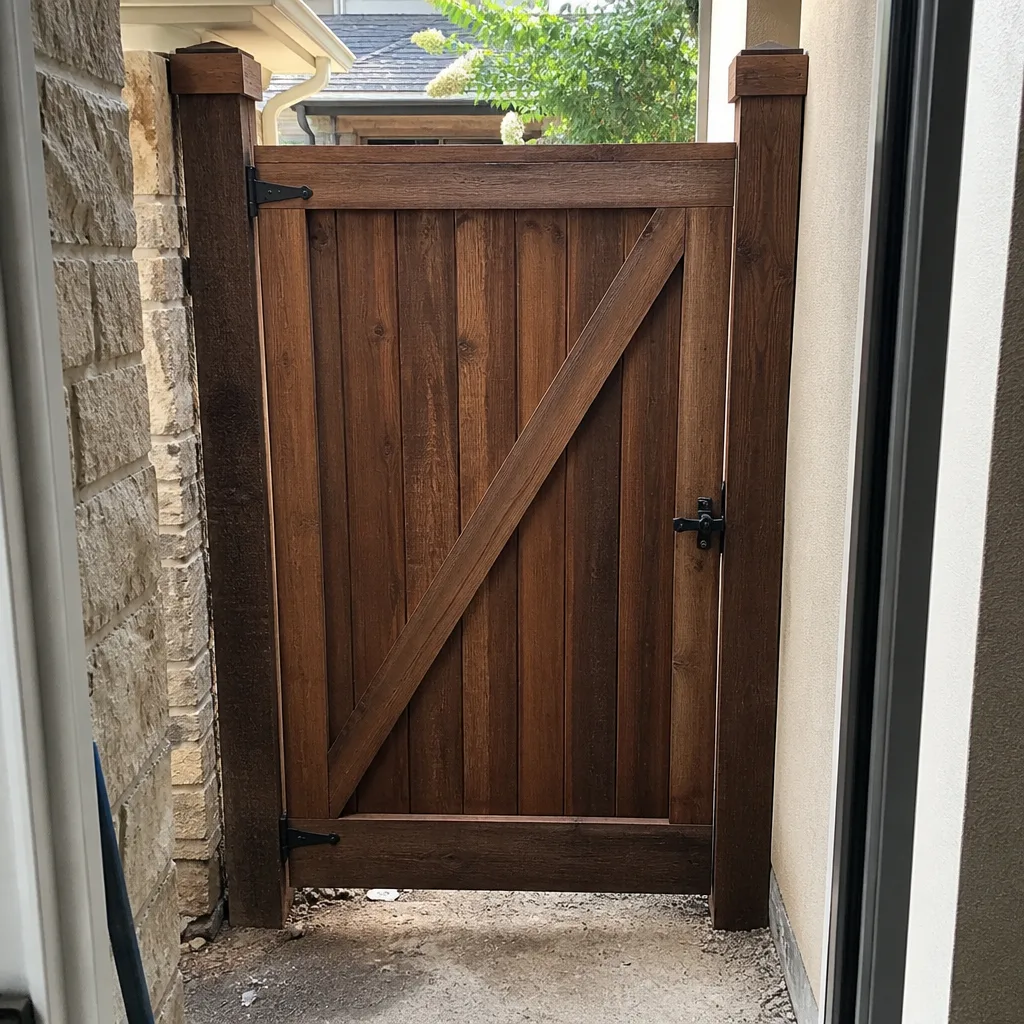 After
AfterGate Repair Maintenance Checklist for Southlake Homeowners
Most driveway gates in Southlake fail for the same reason most air conditioners fail in August: nobody looked at them until they stopped working. The soil here shifts with the seasons, the wind carries fine grit into every hinge and track, and the summer heat hardens grease until it turns to glue. A gate that weighs 800 pounds does not forgive neglect. This guide is a working maintenance checklist, not a sales brochure. We will show you what to check, when to check it, and what you can safely handle yourself versus what needs a trained hand. If you own an automatic gate in Southlake, this is the routine that keeps it running for decades instead of years.
Quick Answer
The core of gate maintenance in Southlake is a quarterly visual inspection of hinges, track, wheels, and opener mechanics, plus a twice-yearly cleaning and lubrication of all moving parts with the correct products. Homeowners should check safety sensors monthly, keep the track clear of Texas dust and debris, and schedule a professional tune-up once a year. A well-maintained gate can last 20 to 30 years; a neglected one often needs major repair or replacement within 10.
Table of Contents
- The Quarterly Inspection: What to Look For
- Cleaning and Lubrication: The Twice-Yearly Routine
- Safety Sensors and Auto-Reverse: Monthly Checks
- Seasonal Maintenance in Southlake’s Climate
- Battery Backup and Power Systems
- Hardware, Welds, and Structural Integrity
- Opener and Motor Maintenance by Brand
- Common Mistakes to Avoid
- When to Call a Professional
- Frequently Asked Questions
- The Bottom Line
The Quarterly Inspection: What to Look For
A gate is a machine, and machines talk. They squeak, grind, shiver, and hesitate. Most Southlake homeowners hear these sounds for months before the gate actually quits, but they do not know what they are hearing. The quarterly inspection is about training your ear and your eye. Set a reminder four times a year. Walk out to the gate with a flashlight and five minutes. Here is what you are looking for.
First, watch the gate move through a full cycle. Stand to the side, not in front of it. Does it move smoothly, or does it stutter? Does it speed up and slow down unpredictably? Does it slam at the end of travel or stop softly? A smooth, consistent cycle means the opener and the hardware are working together. A jerky cycle almost always means friction somewhere: a dry roller, a sagging hinge, a wheel fighting the track, or a motor straining against the load.
Second, listen. A high squeal is metal on metal, usually a hinge or roller begging for lubrication. A low grinding sound is more serious: it often means a bearing is worn, a wheel is flat-spotted, or the chain or belt is out of tension. A clicking sound at the start of the cycle can indicate a failing capacitor in the opener. None of these sounds will fix themselves. The sooner you identify them, the cheaper the repair.
Third, look at the physical parts while the gate is stopped. Here is the checklist:
- Hinges: Look for rust, sagging, or movement. Put a hand on the gate and try to lift it gently. A properly hung gate should not move up more than a fraction of an inch. Vertical play means a worn hinge pin.
- Rollers and wheels: Check for flat spots, wobble, or debris wrapped around the axle. A flat-spotted wheel makes the gate bump every cycle and wears out the opener.
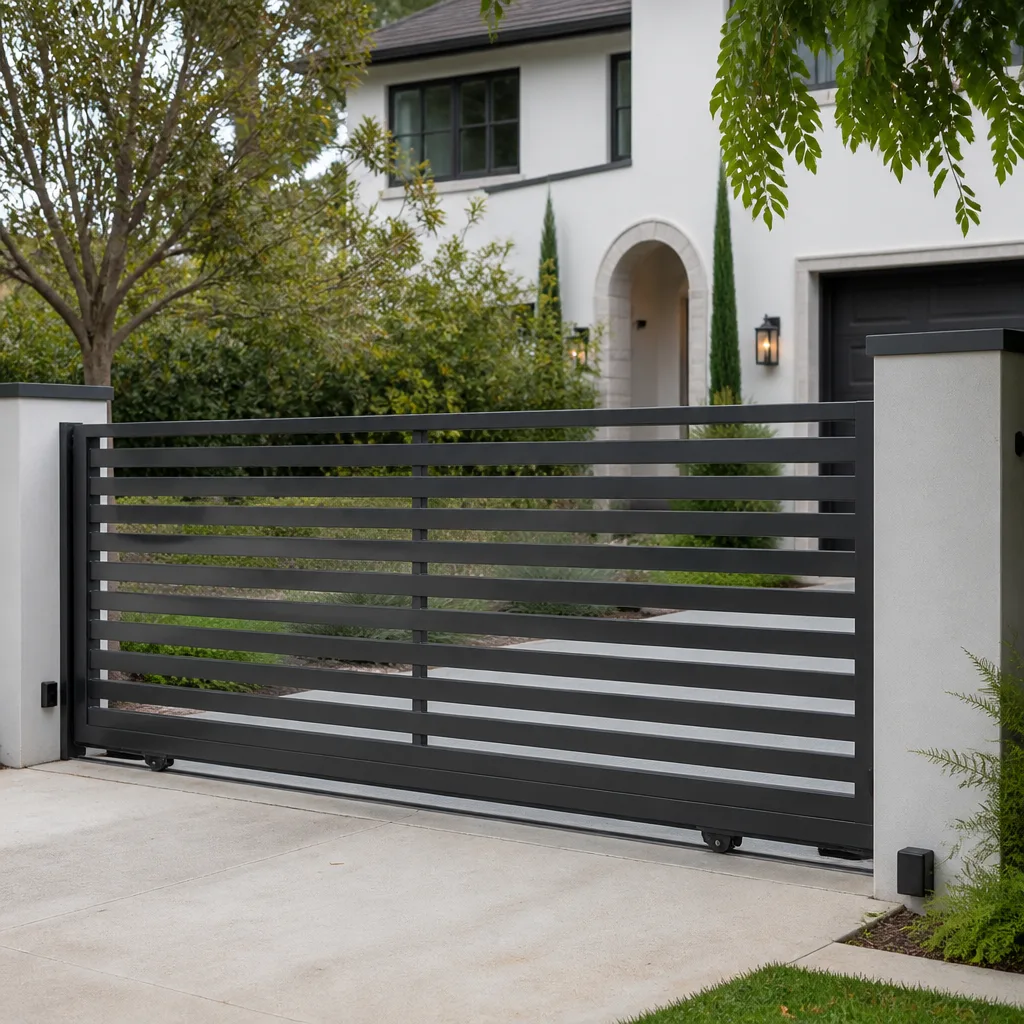
- Track: If you have a sliding gate, scan the entire track for rocks, twigs, mud, or any object that should not be there. Even a pebble can cause the gate to bind.
- Posts and mounting pads: Look for cracks in the concrete or movement in the post. Southlake soil expands and contracts with moisture, and a post that shifts even a quarter inch will throw the gate out of alignment.
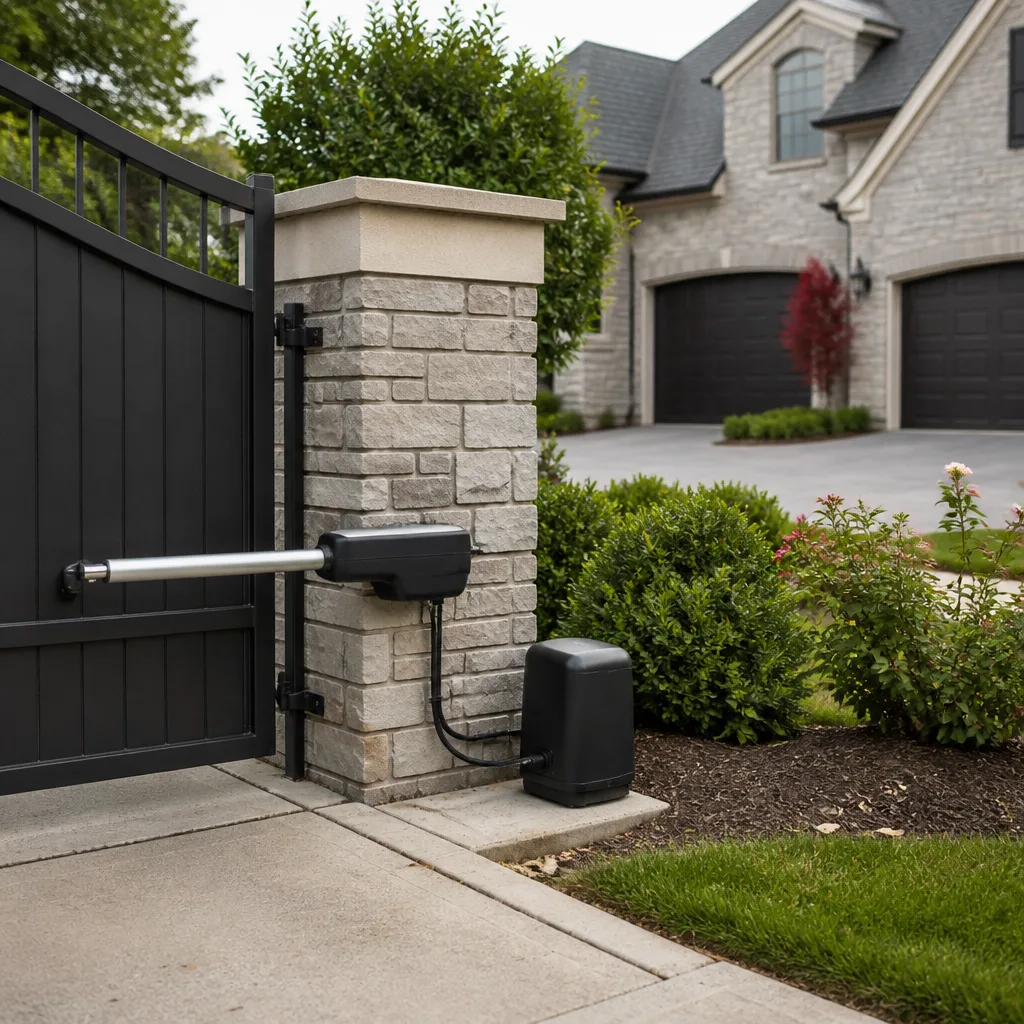
- Opener housing: Check for signs of moisture, insect nests, or chewed wiring. Texas heat drives rodents and insects into cool, shaded enclosures.
If the inspection turns up anything you cannot explain, take a photo and note the date. When you call a gate company, you will be able to describe exactly what you saw and when it started.
Cleaning and Lubrication: The Twice-Yearly Routine
Lubrication is the single most effective maintenance task for any gate, and it is the one most often done wrong. Using the wrong product is worse than doing nothing. In Southlake’s dry, windy climate, spray lubricants like WD-40 attract dust and create a gritty paste that accelerates wear. What a gate needs is a clean lubricant designed for heavy, slow-moving metal parts.
We recommend a twice-yearly schedule: once in late spring, once in late fall. Here is the correct process.
- Clean first, always. Wipe down every hinge, roller, track, and moving surface with a dry rag or a stiff brush. Remove all old grease, dust, and grit. Lubricating over dirt just buries the dirt deeper into the joint.
- Use a white lithium grease or a silicone-based lubricant on hinges, roller bearings, and pivot points. These products stay put and do not attract dust the way penetrating oils do.
- Apply sparingly. A thin coat is all you need. Excess grease collects grit and drips onto the driveway, which stains concrete and looks terrible.
- Check the chain or belt on the opener. A chain drive needs a light oil designed for chains. A belt drive needs no lubrication at all; if it looks dry or cracked, it is time to replace it, not oil it.
- Run the gate through three full cycles after lubricating. Listen. The gate should be noticeably quieter. If it still squeaks or groans, something is worn beyond what lubrication can fix, and that is a repair call, not a maintenance issue.
One local note: Southlake gets real temperature swings, from below freezing in winter to sustained 100-degree days in July and August. Lubricants break down faster in heat. If you skipped your spring lubrication and the gate starts sounding dry in August, do not wait for fall. Give it a cleaning and a light re-coat. The heat will have cooked off whatever was there.
Safety Sensors and Auto-Reverse: Monthly Checks
The safety systems on an automatic gate are not optional. They are the difference between a gate that stops for a child and a gate that does not. Every automatic gate installed in Southlake is required to have safety entrapment protection, which usually means photo-eye sensors near the bottom of the gate posts and a reverse mechanism in the opener itself. These systems fail silently. The gate keeps opening and closing normally while the sensors are dead, and you do not know until something goes wrong.
The monthly check takes two minutes.
- Clean the sensor lenses. Use a soft cloth. Dust, spider webs, and pollen from Southlake’s live oaks will block the beam.
- Test the photo eyes. With the gate open, place a box or a trash can in the path of the closing gate. Press the close button. The gate should stop and reverse immediately. If it does not, stop using the gate and call a technician.
- Test the auto-reverse. On most openers, you can trigger this by blocking the gate with a firm object during a closing cycle. The gate should reverse direction when it meets resistance. Do this gently: you are testing the safety system, not trying to break the gate.
- Check the warning signage. Automatic gates in Southlake should have visible warning signs mounted on or near the gate. If a sign is missing or faded, replace it.
If either safety test fails, do not wait. A gate that closes on a person or a pet is a tragedy that no maintenance schedule can undo. The fix is usually simple: a misaligned sensor or a dirty lens. But the cost of ignoring it is not something we want any Southlake homeowner to learn firsthand.
Seasonal Maintenance in Southlake’s Climate
Southlake sits on the edge of the Fort Worth prairie. The soil is clay-heavy, which means it shrinks in drought and swells after heavy rain. That movement is hard on gate posts and concrete pads. The wind is constant, pushing fine dust and sand into every moving part. The summers are brutal, and the winters, while short, bring occasional freezes that can crack plastic components and kill batteries. A maintenance schedule that works in California or Florida will not work here.
Here is what to plan for each season.
Spring (March-May): This is the most important maintenance window in Southlake. Oak pollen is heavy, storms are frequent, and the soil is shifting as it dries out. Clean everything thoroughly, check every hinge and bolt for looseness, and inspect the concrete pads for new cracks. Spring is also when we recommend scheduling an annual professional tune-up, before the summer heat arrives.
Summer (June-September): Heat is the enemy of opener electronics. Capacitors fail faster, plastic gears get brittle, and batteries cook. Keep the opener housing shaded if possible, and watch for the gate running slower than normal in the afternoon. A hot motor pulling extra amperage is a warning sign. Also watch for new squeaks: heat burns off lubricant quickly, so a mid-summer re-lubrication is often necessary.
Fall (October-November): Leaves and acorns get into tracks and wheels. Clean the track more often, and do the full lubrication routine before winter. Check weather seals around the opener and keypad housings. Rodents look for warm places in fall, and a gate opener box is an attractive home.
Winter (December-February): Freezes are rare but real in Southlake. When ice is in the forecast, consider leaving the gate in manual mode overnight if you do not need it to operate. A gate frozen to the ground can strip gears or burn out a motor when the opener forces it. Check the battery backup before the first freeze, not during it.
Battery Backup and Power Systems
Every automatic gate opener in Southlake should have a battery backup. Storms knock out power regularly, and a gate without backup power is either stuck open or stuck closed. Neither is acceptable. The battery is also the component most homeowners forget exists until it fails.
Most opener batteries last three to five years in North Texas heat. If you have not replaced yours in that window, assume it is time. A dead battery often passes an afternoon test but dies overnight when it is actually needed. The only way to know is to test it under load: unplug the opener from AC power and run the gate through several cycles. If it slows down noticeably by the third or fourth cycle, the battery is failing.
Solar panels are common on Southlake gates, and they need cleaning more often than most people think. Dust and pollen cut their output dramatically. Wipe the panel faces monthly during spring and summer. If your gate is solar-powered and starts running slower or the battery drains faster, the panel or the charge controller is usually the problem, not the battery itself.
One more thing worth checking: the surge protector or GFCI outlet that feeds the opener. Power surges during Texas thunderstorms are routine, and a direct surge can fry a control board. If your opener has been through a storm and is acting strangely, the board may have taken damage even if the gate still opens. A technician can check the board and the power feed before a small problem becomes a full replacement.
Hardware, Welds, and Structural Integrity
In our experience, the most expensive gate repairs in Southlake are not opener failures. They are structural failures: a hinge that tears out of a post, a weld that cracks, a post that leans because the concrete failed. These failures rarely happen without warning. The gate tells you for months before it lets go.
Here is what to watch for.
- Rust at the welds. Rust is the visible sign of a weld losing its strength. Surface rust can be cleaned and painted. Deep rust that flakes or crumbles means the weld is compromised.
- Cracks in the metal. Look at the stiles and rails of the gate itself, especially near hinge plates and latch points. Hairline cracks grow. A crack caught early is a cheap weld repair. A crack ignored is a gate that folds.
- Lean in the posts. A gate post should be plumb. If the gate post leans even slightly, the gate starts dragging, the hinges bind, and the opener works harder every cycle. Southlake clay soil is hard on posts, especially after a wet spring.
- Movement in the concrete pad. Check the pad under the gate and the post footings. Cracks wider than a pencil line, or pads that have sunk below grade, indicate soil movement.
- Loose bolts and fasteners. Vibrations from daily use loosen bolts over time. Check every visible bolt and lag screw during your quarterly inspection. A loose bolt is a five-minute fix now and a broken hinge later.
Welding and structural repair is a craftsmanship job. It requires someone who understands load paths, metal thickness, and heat distortion. If your gate has a structural issue, this is not the place to hire the cheapest bid. A bad weld on a heavy gate is a safety hazard in the making. This is the kind of work we do every week at Ironworks Gate Co., from cracked hinge plates to full post replacements. Our Ironworks Gate Co. home page covers the full scope of structural and welding services available in Southlake.
Opener and Motor Maintenance by Brand
The opener is the heart of an automatic gate, and not all openers are built the same way. Southlake homeowners have everything from entry-level Mighty Mule units on light driveway gates to heavy-duty BFT and Linear hydraulic operators on estate gates. Each brand has its own maintenance personality.
We are trained and equipped on nine major gate automation brands, and we carry parts for all of them. Here is what to expect from a few of the most common ones.
BFT openers are common on larger Southlake properties. They are workhorses, but they are sensitive to power surges and voltage drops. If your BFT unit resets or loses its programming during storms, install a dedicated surge protector on its circuit. BFT control boards are expensive, and a surge protector is cheap insurance. Keep the housing seals clean and check for moisture intrusion after heavy rain, because the boards do not tolerate corrosion.
Linear openers are widely used in residential and light commercial settings. They are generally reliable, but their plastic drive gears wear down over time, especially in the heat. If the opener starts slipping or making a clunking sound as the gate starts moving, the gear is likely stripping. Replace it before it fails completely, because a stripped gear can jam the gate mid-cycle.
Viking and Ghost Controls openers are popular on lighter residential gates. Both brands sell a lot of DIY-installed units, which means the installation quality varies. We see improperly adjusted limit switches and poorly aligned photo eyes on these units more than any other brand. If you bought a home with a Viking or Ghost Controls opener already installed, have a technician check the limit settings and safety systems once, even if everything seems to work. The settings matter: a gate that over-travels puts stress on every hinge and eventually damages the gate itself.
Whatever brand sits on your driveway, the opener needs the same basic respect: keep it clean, keep it dry, keep the power clean, and do not ignore slow or jerky operation. A $150 sensor replacement is a lot cheaper than a $1,500 control board replacement, and the warning signs appear months before the failure.
Common Mistakes to Avoid
- Using WD-40 on hinges and rollers. WD-40 is a solvent and a water displacer, not a long-term lubricant. It washes away the grease that was doing the real work and leaves the metal dry and vulnerable. In Southlake’s dusty air, it also creates a sticky film that grabs grit.
- Ignoring a squeak. A squeaking gate is not an old gate being charming. It is metal wearing against metal. Every day it squeaks, it wears a little more. Most hinge replacements we do in Southlake started as a squeak six months earlier.
- Forcing the gate when it is frozen or jammed. If the gate will not move, do not keep pressing the button. The opener will keep pulling until something gives, and what gives is usually a gear, a belt, or a motor. Disconnect the opener and investigate manually. And remember that high-tension springs and heavy gate panels are dangerous to work on without training. Let a professional handle the mechanical release if you are unsure.
- Painting over rust without treating it. Paint hides rust but does not stop it. The metal keeps oxidizing under the paint. Treat the rust first with a rust converter or remove it by grinding, then prime, then paint.
- Adjusting limits and force settings without understanding them. Opener settings exist for safety. A force setting that is too high turns the gate into a machine that will crush anything in its path. A limit that is off by an inch causes the gate to slam or not fully close. If you are not sure how these settings work, leave them alone.
- Skipping the annual professional inspection. You can catch a lot on your own, but a trained eye sees things you will miss: early bearing wear, subtle voltage drops, minor misalignment. An annual tune-up is cheap compared to the repairs it prevents.
- Hiring a generalist for specialized gate work. A handyman who fixes gates, fences, drywall, and sprinklers does not carry parts for a BFT or a Linear opener, and does not know the safety standards for automated gates. Gate work is a specialty, and Southlake homeowners who want the job done right call an Ironworks Gate Co. gate repair specialist. This is what we do, every day, and nothing else. Our Southlake gate installation work is also done by the same technicians, using the same tools and the same standards.
When to Call a Professional
Some maintenance tasks belong to the homeowner, and some belong to a trained gate technician. If you see or hear any of the following, do not try to fix it yourself. Call someone who does this work every day.
A gate that reverses or stops randomly is telling you something is wrong with the control board, sensors, or safety system. A hinge with visible play, a post that has shifted, or a gate that scrapes the ground means the structure is failing, not just the opener. Any sparking, burning smell, or electrical issue is an immediate stop: kill the power at the breaker and call a pro. The same goes for heavy, loaded gates that need spring or cable work, because the stored tension in those parts can cause serious injury. And if your opener is more than 10 years old and starting to fail, a professional can tell you honestly whether a repair buys you another decade or whether that money is better spent on a new unit. Our gate opener repair page covers the signs of a failing opener in detail. Ironworks Gate Co. offers free estimates in Southlake. Call (817) 580-8494 and a live person will answer, day or night.
Frequently Asked Questions
You should perform a basic visual inspection every three months, clean and lubricate the moving parts twice a year, and schedule a professional tune-up once a year. Southlake’s heat and dust make gates wear faster than in milder climates, so a twice-yearly lubrication schedule is the minimum we recommend.
A professional tune-up typically includes cleaning and lubricating all moving parts, checking and adjusting the opener’s limit and force settings, testing the safety sensors and auto-reverse, inspecting hinges and welds for wear, tightening all bolts and fasteners, and checking the battery backup. At Ironworks Gate Co., our seasonal tune-up is $89, and it includes a written report of what we found and what we recommend.
Most residential gate openers last 10 to 15 years in Southlake if they are maintained. The heat shortens the life of capacitors and plastic gears, so units that run constantly in full sun tend to fail closer to the 8 to 10 year mark. Units that are shaded and well-maintained can go 15 years or longer before the control board gives out.
Heat increases electrical resistance in the motor windings and makes lubricant thinner, which means the opener has to work harder to move the same weight. If your gate runs noticeably slower on hot Southlake afternoons, it is often a sign that the motor is aging, the hinges are binding, or the gate itself is heavier than it should be. It is worth having a technician take a look before the problem worsens.
A sagging hinge is usually a worn hinge pin or a hinge that is pulling loose from the post, and both are repair jobs rather than maintenance tasks. Replacing a hinge on a heavy gate requires lifting the gate safely and re-hanging it square, which is dangerous to attempt without the right equipment. A trained technician can usually complete this repair in one visit and get the gate closing like new.
Yes. We are trained and equipped on nine major gate automation brands, including LiftMaster, FAAC, BFT, Linear, Viking, Ghost Controls, DoorKing, Elite, and Mighty Mule. Whatever opener is on your Southlake driveway, we carry the parts and know the settings. Our gate opener installation service applies the same brand coverage for new units, and we can help with automatic gate repair on any system already installed.
The Bottom Line
A gate is one of the few machines on your property that works every single day, often multiple times a day, in every kind of weather Southlake throws at it. It does not ask for much: a clean track, a little grease twice a year, a working battery, and a pair of eyes on it every few months. The homeowners who follow this routine are the ones whose gates last 20 years and need nothing more than a sensor battery and a hinge pin along the way. The homeowners who wait until the gate stops moving are the ones who face a four-figure repair bill. The choice is made in small, boring moments: a quarterly walk-around, a monthly sensor test, a tube of white lithium grease. Do the small things, and the gate will do its big job for a long time.
If your gate needs work you do not want to do yourself, or if you would rather have a professional handle the annual tune-up, call us. A live person answers 24 hours a day, seven days a week. We serve Southlake and the surrounding communities with gate repair, installation, openers, access control, and welding. Every job is backed by our written 90-Day Done Right Promise, and the price is settled before we touch a single bolt. Call (817) 580-8494 for a free estimate.
Written by Victor Salinas, Owner at Ironworks Gate Co., serving Southlake since 2013.